
Inside Alserkal’s Autumn Art Season: Five Exhibitions to Start With
From questions of home and displacement to personal memory and the histories held by everyday materials, these five exhibitions offer a first look at the new season across Alserkal Avenue.
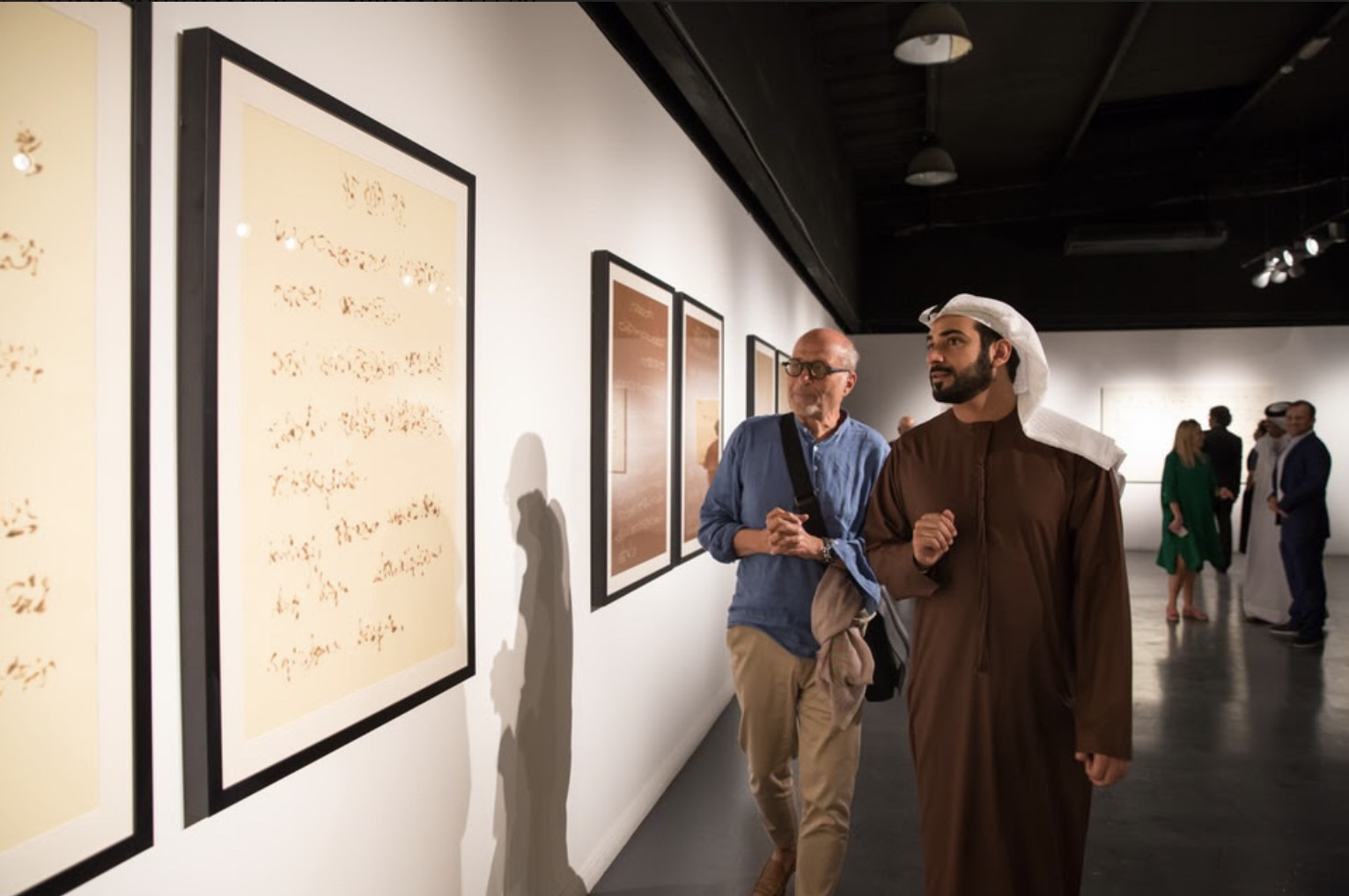
Dubai’s new art season has arrived at Alserkal Avenue, one of the UAE’s leading cultural districts. With 16 galleries presenting exhibitions this season, the programme extends across a wide range of artists, media and ideas.
This first selection brings together five shows that approach memory from different directions. Some consider what happens when a person leaves one country and builds a life in another. Others focus on objects that have travelled through generations or on experiences that remain recorded in the body. Here is where to begin, along with the dates you need to plan your visit.
Carbon 12 Gallery
Exhibition: May the Tree No Longer Burn When I Wake
Dates: September 23 — November 5
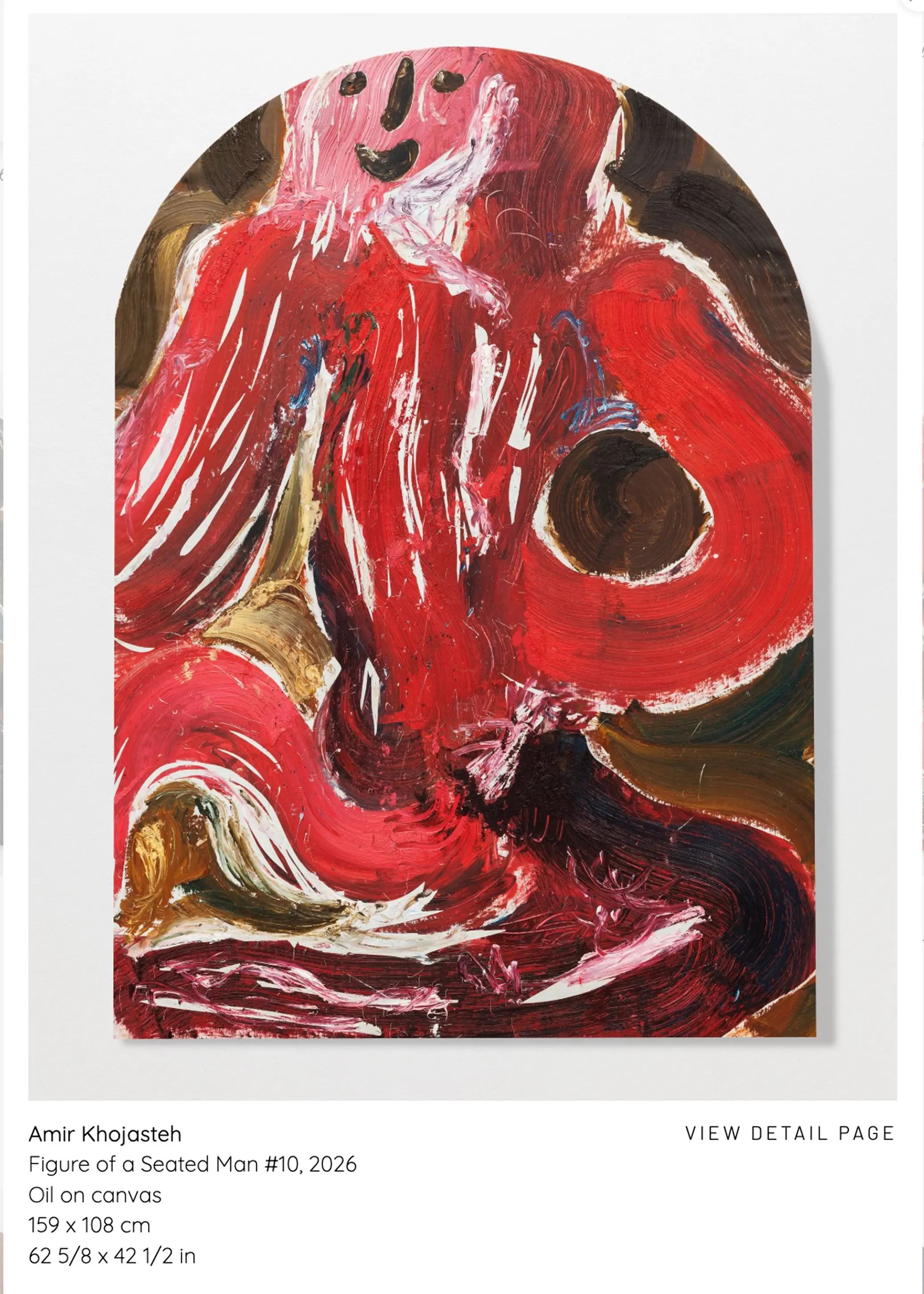
In May the Tree No Longer Burn When I Wake, Iranian artist Amir Khojasteh continues the story he began in his earlier exhibition, Living in a Burning House. He made that previous body of work while living in Iran, using the image of a house on fire to represent the instability surrounding him.
Khojasteh has since left Iran, and this exhibition reflects the change in his point of view. Rather than experiencing the metaphorical fire from inside, he now observes it from elsewhere, considering the destruction, the traces it has left and the possibility of what may follow.
The Persian garden provides the framework for this new chapter. Historically conceived as a protected paradise within a severe landscape, it placed water and vegetation behind walls, with the desert outside. Khojasteh reworks that idea by treating the gallery as a garden that offers refuge without complete separation. Through its imagined windows, the burning landscape remains visible.
Distance may provide safety, but it does not erase a connection to the place left behind. Against this setting, the exhibition’s title reads as a direct hope: that after sleep, the tree seen burning from afar will finally be untouched by fire.
Aisha Alabbar Gallery
Exhibition: What We Carry Becomes the Terrain
Dates: September 23 — November 7
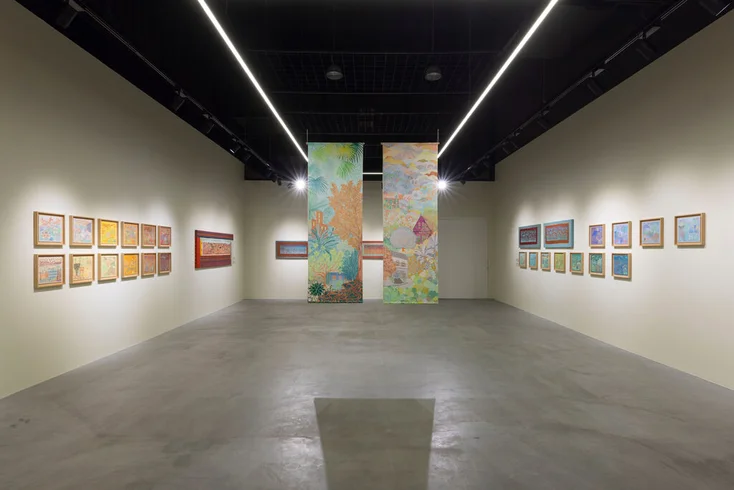
French artist Bénédicte Gimonnet, who has Peruvian roots and has lived and worked in the UAE since 2009, explores the experience of belonging to several places at once in her solo exhibition What We Carry Becomes the Terrain. Paintings, drawings and textile pieces come together to examine how geography, memory and identity overlap.
A return journey to Peru became the exhibition’s point of departure. Gimonnet’s views of the Amazon are shaped by memories of childhood, while the strong colours refer to Peruvian folklore, particularly Quechua weaving traditions. These elements lead beyond visual references to broader questions about roots: whether a place remains part of a person after they leave and how the idea of home changes when life unfolds between cultures.
Her hand-stitched textile works make that question tangible. Fabrics sourced in Peru, France and the UAE are joined within individual pieces. Each material keeps its distinct origin and texture, yet together they form a single work — much like an identity created across several countries without reducing them to one.
The exhibition’s title reflects this idea. Home is presented not only as a fixed location but as the collection of places, histories and memories a person continues to carry.
Efiɛ Gallery
Exhibition: Sojourner: The Difference Is the Same
Dates: September 23 — November 13
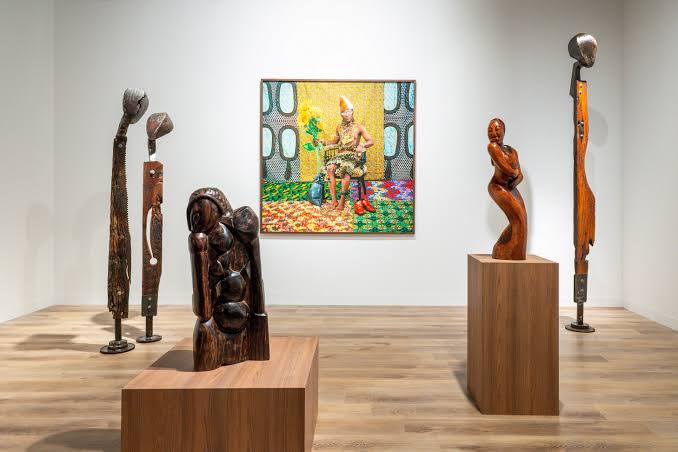
Sojourner: The Difference Is the Same marks Maggie Otieno’s first solo exhibition with Efiɛ Gallery since it began representing her in 2024. Across a practice spanning almost 30 years, Otieno has repeatedly worked with materials that are aged, discarded or damaged, recognising that they possess histories long before entering an exhibition space.
The new works centre on railway sleepers taken from her Nairobi studio. More than 150 years old, the wooden beams are connected to East Africa’s colonial past. They were transported from India to Kenya in the late 19th century for the construction of railways and remained there as people, labour and communities continued to move along those routes.
Other pieces developed from Otieno’s 2025 residency at El Anatsui’s studio in Ghana, where she used sections of old wooden canoes. In some works, the fragments are connected with hinges and open like books. Materials once built to enable travel become records of the journeys and periods they have already passed through.
Here, the “sojourner” is not limited to a single traveller. The exhibition considers how objects move across locations, eras and uses, taking on new forms without losing the evidence of their earlier lives.
Firetti Contemporary
Exhibition: The Living Archive
Dates: September 21 — November 11
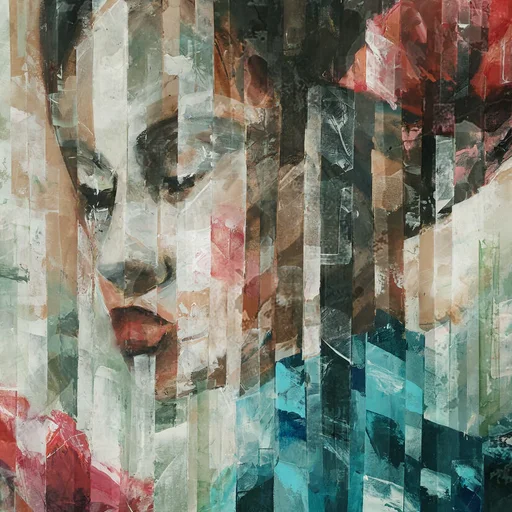
Syrian artist Ahmad Tallaa, who was born in Damascus and is now based in the UAE, works across painting, sculpture and artist books. His solo exhibition The Living Archive focuses on memory, identity and the marks that experience leaves on a person.
Tallaa reconsiders the meaning of an archive. Instead of treating it as a collection of photographs, letters or official records, he locates it in the individual. In this view, a person holds the documentation of their own life: in memory and character, in the appearance of the face and body, and sometimes in physical scars.
The materials of the portraits reinforce that concept. Sand, chalk, pigment and acrylic build rough surfaces filled with cracks, irregularities and accumulated layers. Rather than sitting cleanly on top of the works, the faces appear to come forward through the material, as though uncovered from beneath it.
By making those layers visible, Tallaa connects a person’s present appearance with everything that preceded it. The individual seen now cannot be separated from the experiences through which they were formed.
Ayyam Gallery
Exhibition: Allusive Veil
Dates: September 23 — October 30
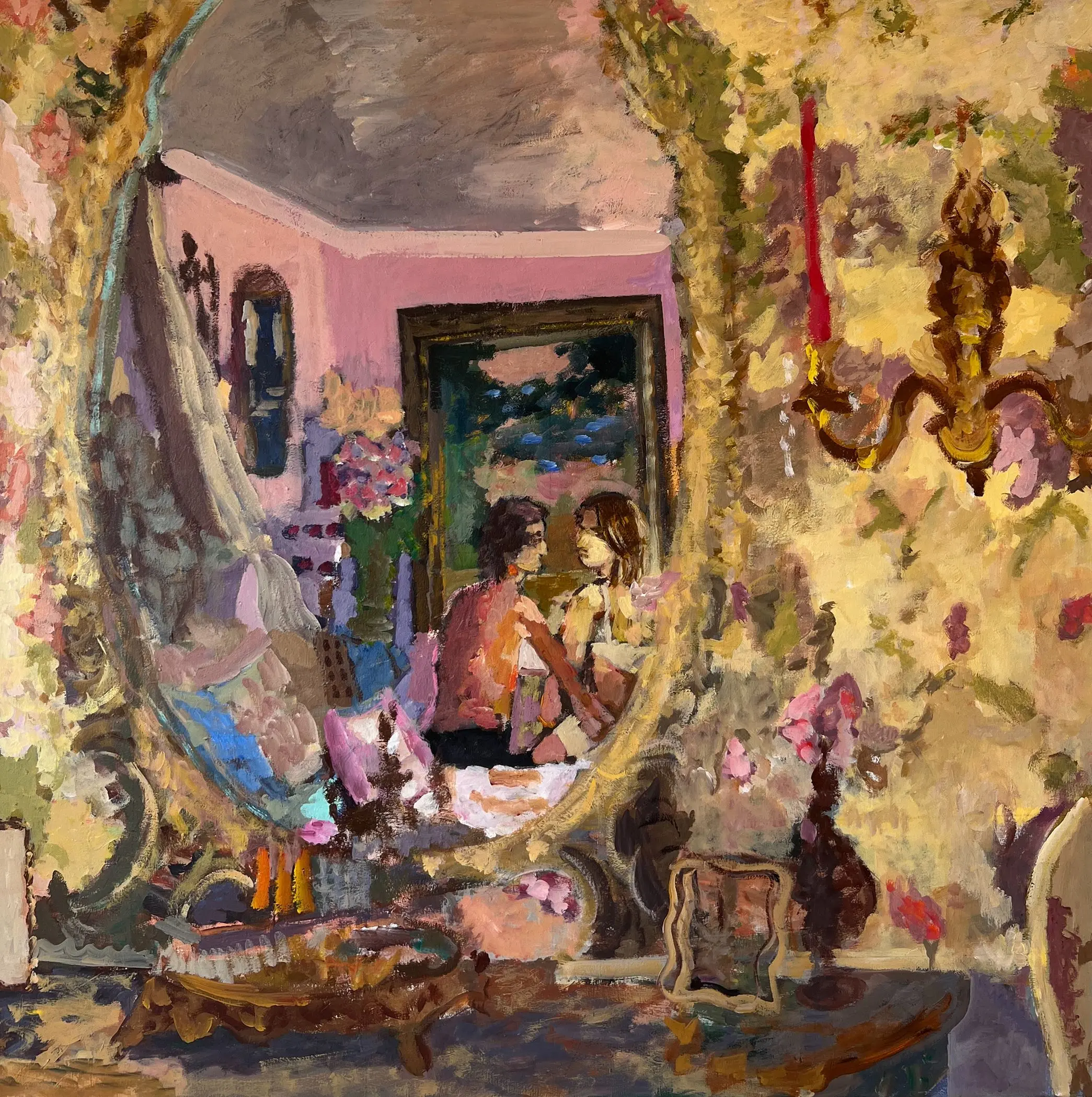
Bahraini painter Hisham Sharif turns to the less visible side of private life in Allusive Veil, a solo exhibition informed in part by 19th-century French painting. His works address relationships, love, isolation, coming of age and the pressure of social expectations within Bahrain’s conservative society.
Sharif approaches these subjects indirectly. Rather than making them explicit, he relies on mood, symbols and carefully constructed suggestion — an approach reflected in the word “veil” within the exhibition’s title. Autobiographical memories and personal experiences shape much of the work, but certainty is deliberately unsettled.
Mirrors and reflective surfaces repeatedly complicate what the viewer sees. Reality, recollection, reflection and imagination begin to overlap, making it difficult to separate one from another.
The cheetah and gazelle provide another recurring language throughout the exhibition. The animals stand in for shifting relations between strength and vulnerability, predator and prey, and masculinity and femininity. Through these pairings, Sharif examines gender roles, patriarchy and social expectations while leaving their meanings open rather than stating them directly.
Latest Posts

Princess Deemah bint Mansour bin Saud Al Saud, Weam Al Dakheel and Mashael Al Obaiden come together in Diriyah for a campaign shaped by presence, firsts and fearless ambition.
More than a decade after opening at NYU Abu Dhabi, The Arts Center has grown beyond a performance venue — creating space for artistic discovery, long-term collaboration and a community willing to experience the unfamiliar

Is a media outlet that is part of our agency and provides basic tools for nurturing your business.


