
Paris in Perspective: Six Collections Shaping Spring/Summer 2027
Lighter tailoring, luminous eveningwear and unexpected construction bring fresh energy to the French fashion houses
Paris Fashion Week’s spring/summer 2027 collections offer several answers to the same question: how can a house’s heritage serve a contemporary wardrobe? For some designers, the response lies in fabric and movement. For others, it emerges through altered proportions, decorative details or a familiar garment constructed in an unfamiliar way.
Across Dior, Saint Laurent, Maison Margiela, Schiaparelli, Chloé and Balenciaga, the archives provide starting points for collections with distinct personalities. These are the ideas that stand out.
A Lighter Approach to Heritage
Dior: Structure Gives Way to Movement
Jonathan Anderson approached Dior’s signature shapes through a change in material. The Bar jacket and generous skirts associated with the New Look appeared in chiffon, allowing traditionally structured silhouettes to become sheer and fluid. Printed tweed and pinstripe effects preserved the suggestion of tailoring while changing how the garments behaved.
Layered circular skirts, fine pleating and pastel floral embellishments extended this delicate approach. Striped shirts, pyjama references and khaki pieces gave the collection a practical counterpoint, placing Dior’s formal vocabulary alongside clothes suited to less ceremonial occasions.
The most interesting shift was physical: recognisable shapes acquired a different weight, opening up new possibilities for wearing them.
Chloé: Romance Through Texture
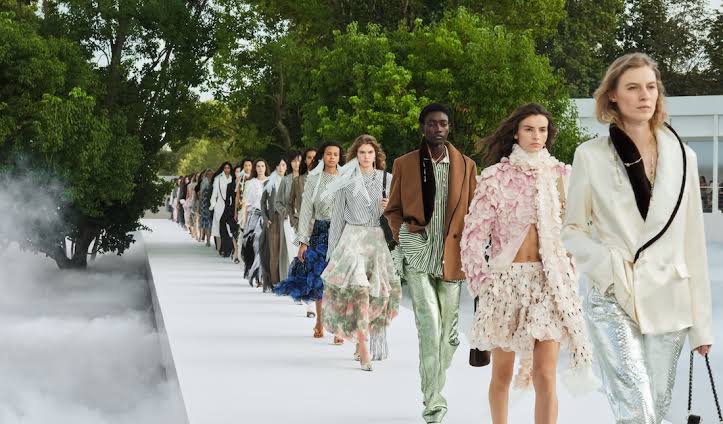
Chemena Kamali placed Broderie Anglaise at the centre of her Chloé collection, revisiting a fabric connected to founder Gaby Aghion’s early work. Eyelet embroidery appeared across loose smocks, blouses and dresses finished with tassels, while guipure lace introduced more elaborate surfaces and raised floral details.
The collection’s romance had a sensual edge. Open lace tops approached the delicacy of lingerie, with white tailoring lending definition to the styling. High-waisted boot-cut trousers and jumpsuits brought in another familiar Chloé silhouette.
Outerwear broadened the picture: generous fisherman coats and translucent layered raincoats added scale to a wardrobe otherwise rich in intricate detail.
Dressing for Impact
Saint Laurent: An Exercise in Gold
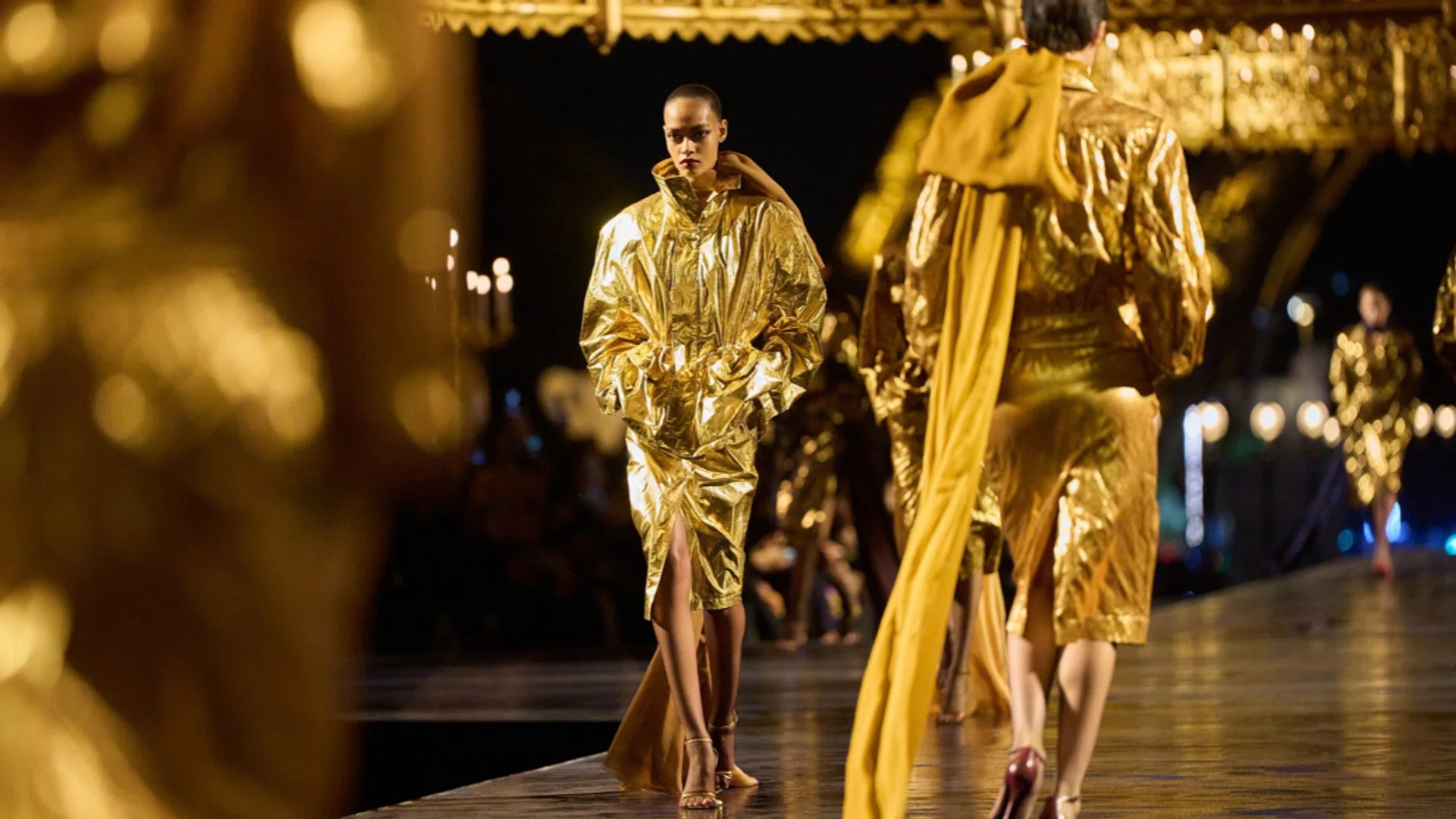
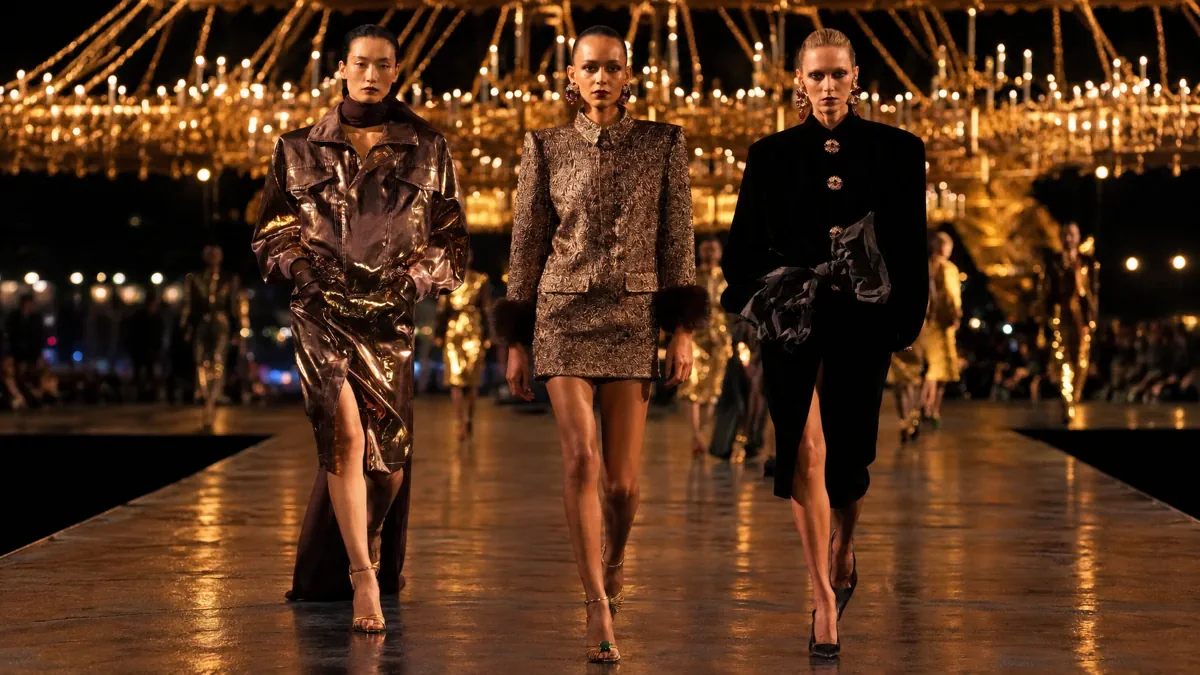
Anthony Vaccarello explored gold across a range of textures at Saint Laurent. Metallic, crinkled fabrics gave safari jackets and trenches a new presence, while brocade added richness to cropped tailoring. Lace cocktail dresses carried the shine into eveningwear.
Scarves in absinthe, amber and cognac introduced colour around the metallic surfaces. Large earrings and exceptionally high heels—including sculptural snake-shaped designs—completed the collection’s assertive styling.
The closing black looks changed the mood after the sustained brightness. Their placement also echoed, in reverse, the gold ending of Yves Saint Laurent’s autumn 1991 Rive Gauche collection.
Schiaparelli: Surrealism in the Details
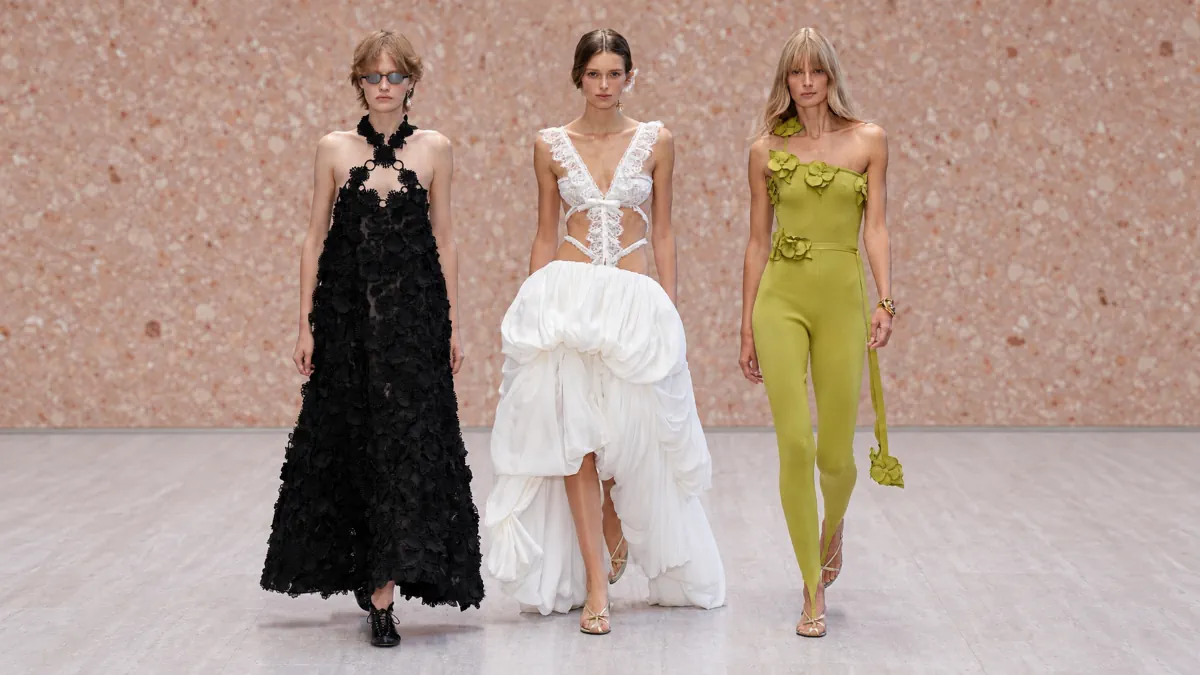
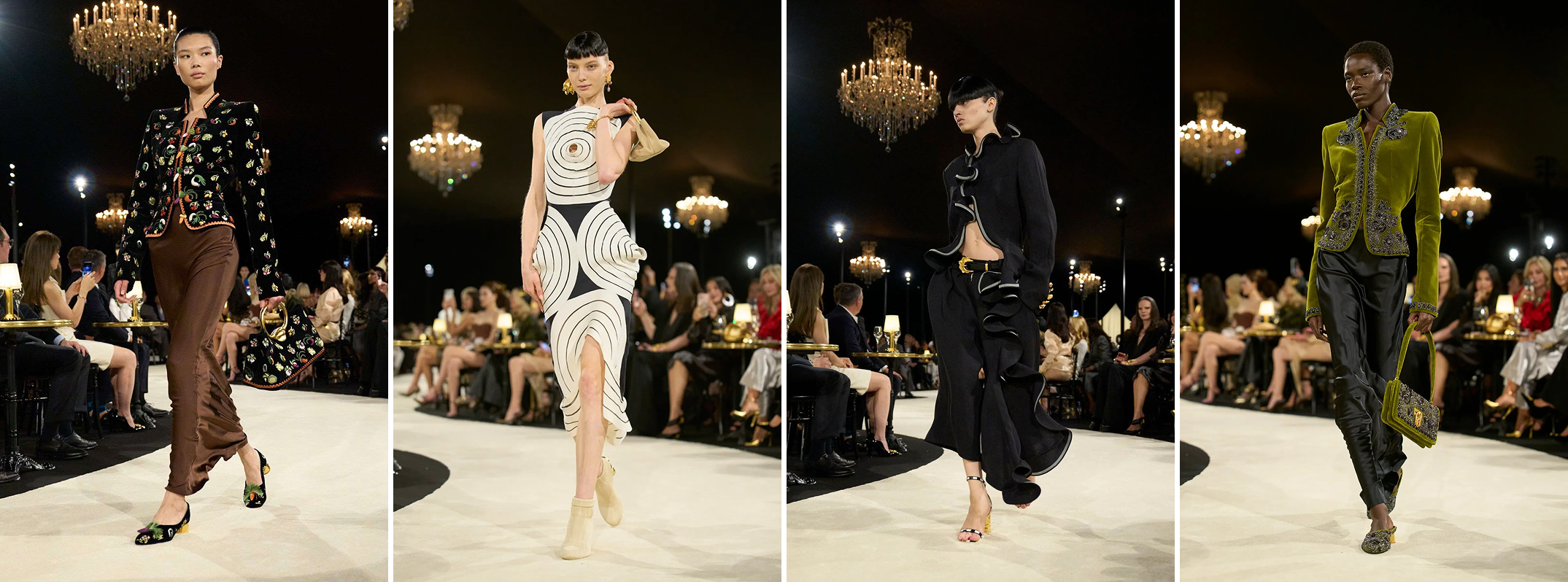
Daniel Roseberry gave Schiaparelli’s ready-to-wear a more measured expression this season. Black, bone and buttery tones formed the foundation, with pale pink and emerald providing selective accents.
Decoration remained precise and prominent. Jewellery-like embellishments and polished gold finishes enriched jackets and other pieces, bringing elements of couture craftsmanship into a more relaxed wardrobe.
Elsa Schiaparelli’s carrot motif supplied a playful archival reference. Such touches carried the house’s eccentricity through individual details, giving the collection character without requiring every look to become a spectacle.
Familiar Clothes, Unexpected Forms
Maison Margiela: Construction Becomes the Story
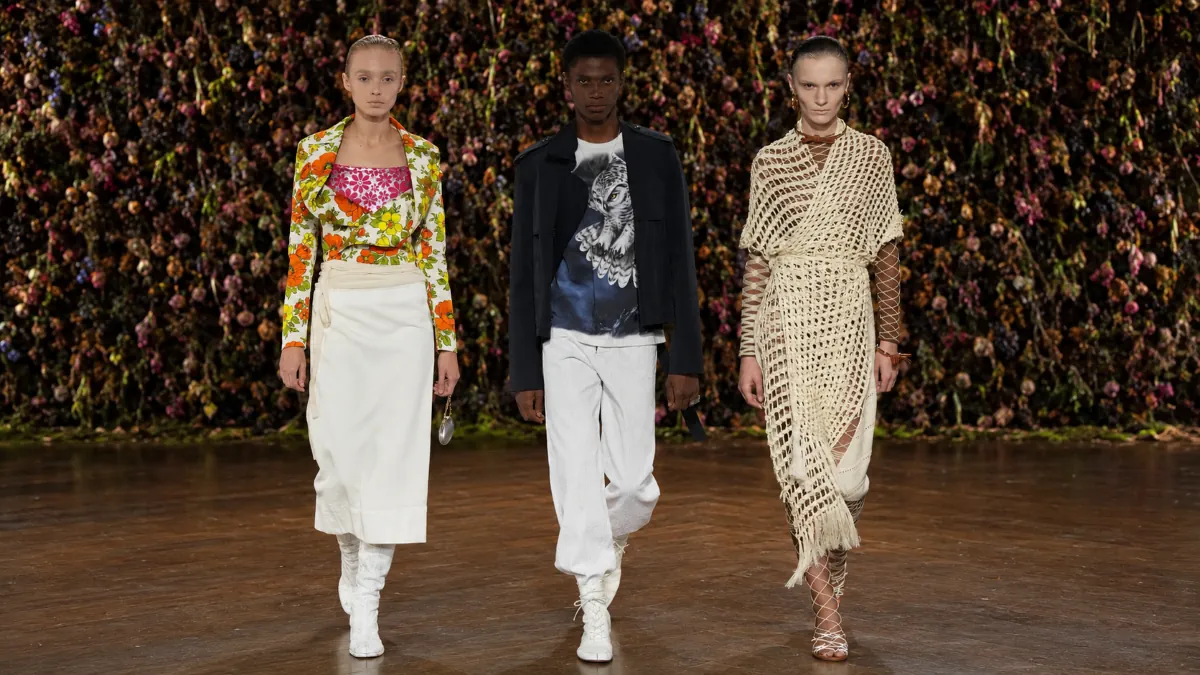
Glenn Martens turned his attention to everyday dressing at Maison Margiela, using recognisable garments to explore the house’s interest in disruption.
Folded lapels altered the appearance of tailoring while allowing the jackets to return to a conventional shape. Shirts, trenches, T-shirts and jersey dresses incorporated rigid sections and internal structures that changed their outlines.
Materials also found unexpected roles. Floral brocade became column skirts secured with cotton tape, while a red lace slip, laminated in vinyl, was integrated into a satin coat. These interventions gave relatively familiar pieces a sense of discovery.
Eveningwear left room for Martens’s more extravagant instincts, with sculptural dresses, complex draping and crushed silverware used as embellishment.
Balenciaga: Everyday Pieces, Couture Techniques
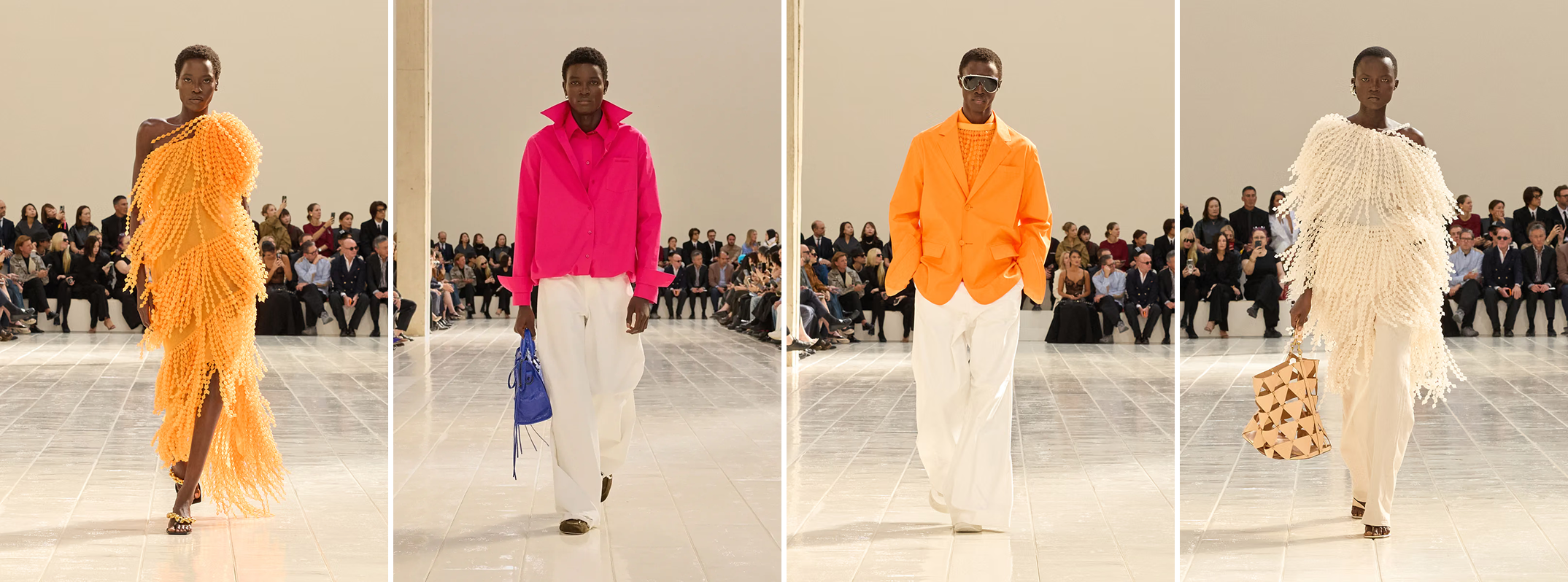
Pierpaolo Piccioli used construction to reconsider the basics at Balenciaga. White shirts and cotton tops developed sculpted shapes through carefully arranged stitching, while bias-cut denim introduced a different approach to a wardrobe staple.
The same interest in proportion extended to evening looks. Slim black tailcoats were accented with duchess satin sashes. A pale pink metallic T-shirt grew into a floor-length trapeze silhouette with a train, its dramatic scale grounded by blue jeans.
Piccioli’s collection connected the house’s couture expertise with garments familiar from daily life. That relationship gave his developing vision for Balenciaga a clear point of interest: the possibility of finding expressive shape in clothes we already know.
Latest Posts

Family entertainment, costume brunches and rooftop celebrations—six ways to spend Halloween in Dubai this year
From Dubai and Casablanca to Paris and Geneva, seven exhibitions explore how artists reinterpret inherited stories, intimate spaces and cultural traditions

Is a media outlet that is part of our agency and provides basic tools for nurturing your business.


