
Middle Eastern Artists Redefining Womanhood Through Body, Memory and Resistance
Across photography, painting, and street art, these women explore identity, and visibility, challenging imposed narratives and reclaiming space
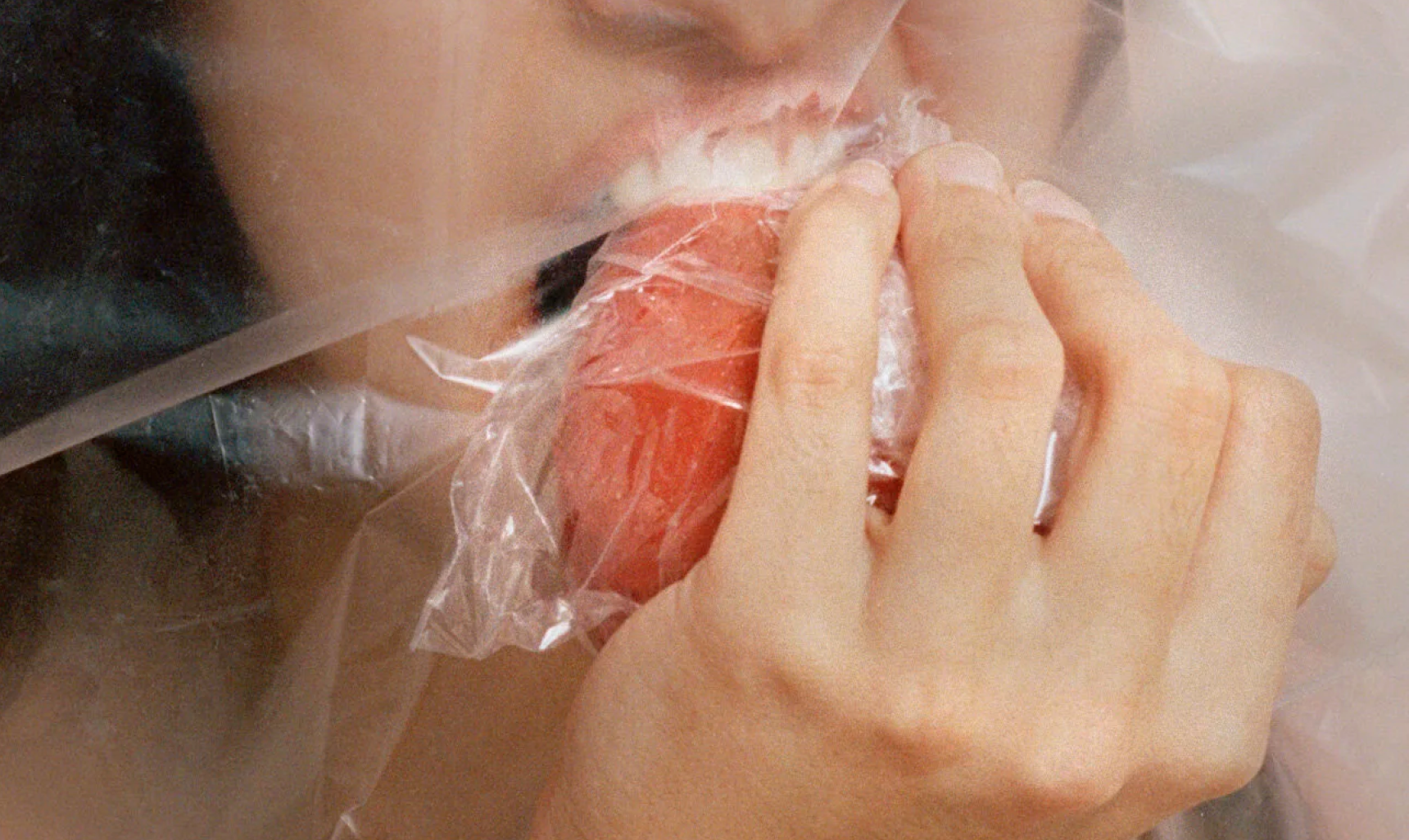
This curated selection brings together Middle Eastern artists whose practices examine what it means to be a woman through the lens of the body, memory and lived experience. Their work engages with questions of visibility, identity and self-definition, drawing deeply from personal histories and the social conditions that continue to shape women’s lives across the region.
Working across a wide range of mediums, these artists use their practices to push back against imposed narratives and carve out space for women’s voices to exist freely — whether in public view, intimate settings or the spaces in between.
Maha Alasker
Maha Alasker is a multidisciplinary artist born and raised in Kuwait, working across photography, performance, textiles and experimental material practices. Her turn toward art began following a deeply personal loss, an experience that led her to use creative expression as a way to reconnect with her body, emotions and inner world.
At the centre of Maha’s practice is an ongoing investigation into the female body and the ways it is viewed, covered, controlled and negotiated within cultural systems. Rather than representing bodies directly, she focuses on tension — between exposure and concealment, presence and absence. Symbolic materials such as fabric, plastic and organic matter frequently appear in her work, standing in for the body itself.
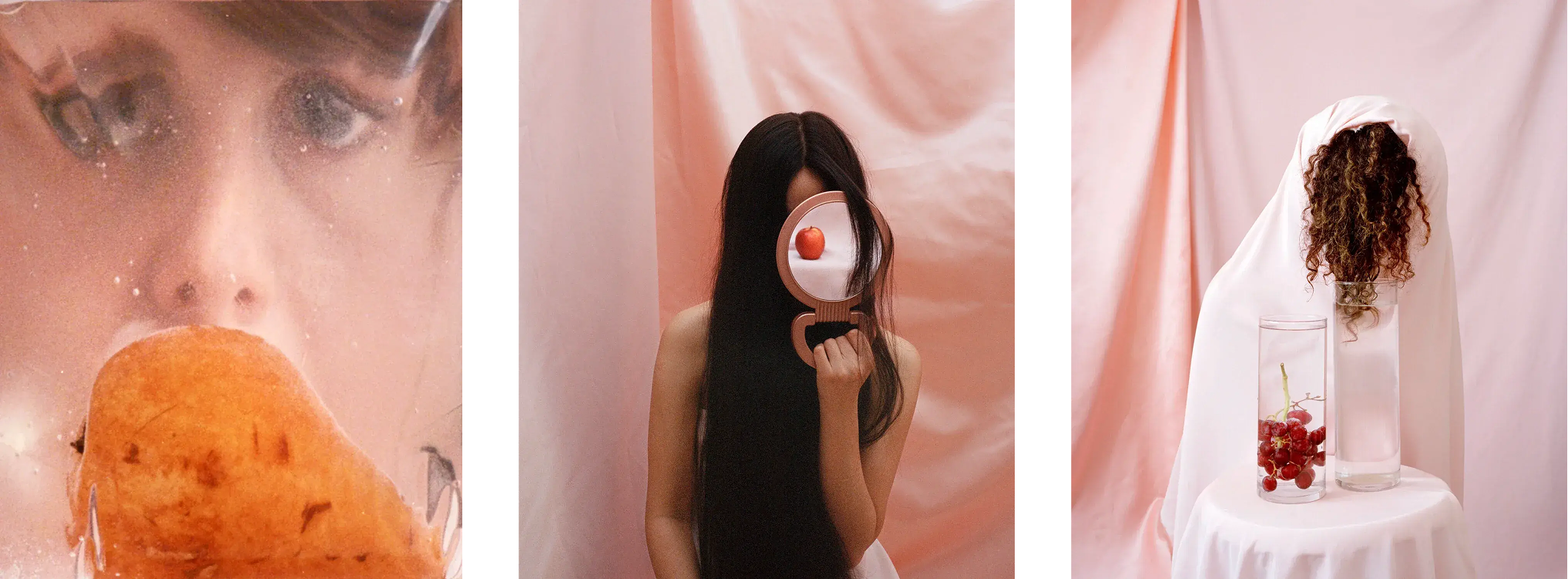
In works like A Trap Called the Body, Maha incorporates everyday materials including plastic bags, fruit and textiles to reflect on how women’s bodies are scrutinised, evaluated and consumed. The body is treated as a surface for projection, almost like a product expected to meet rigid standards of perfection.
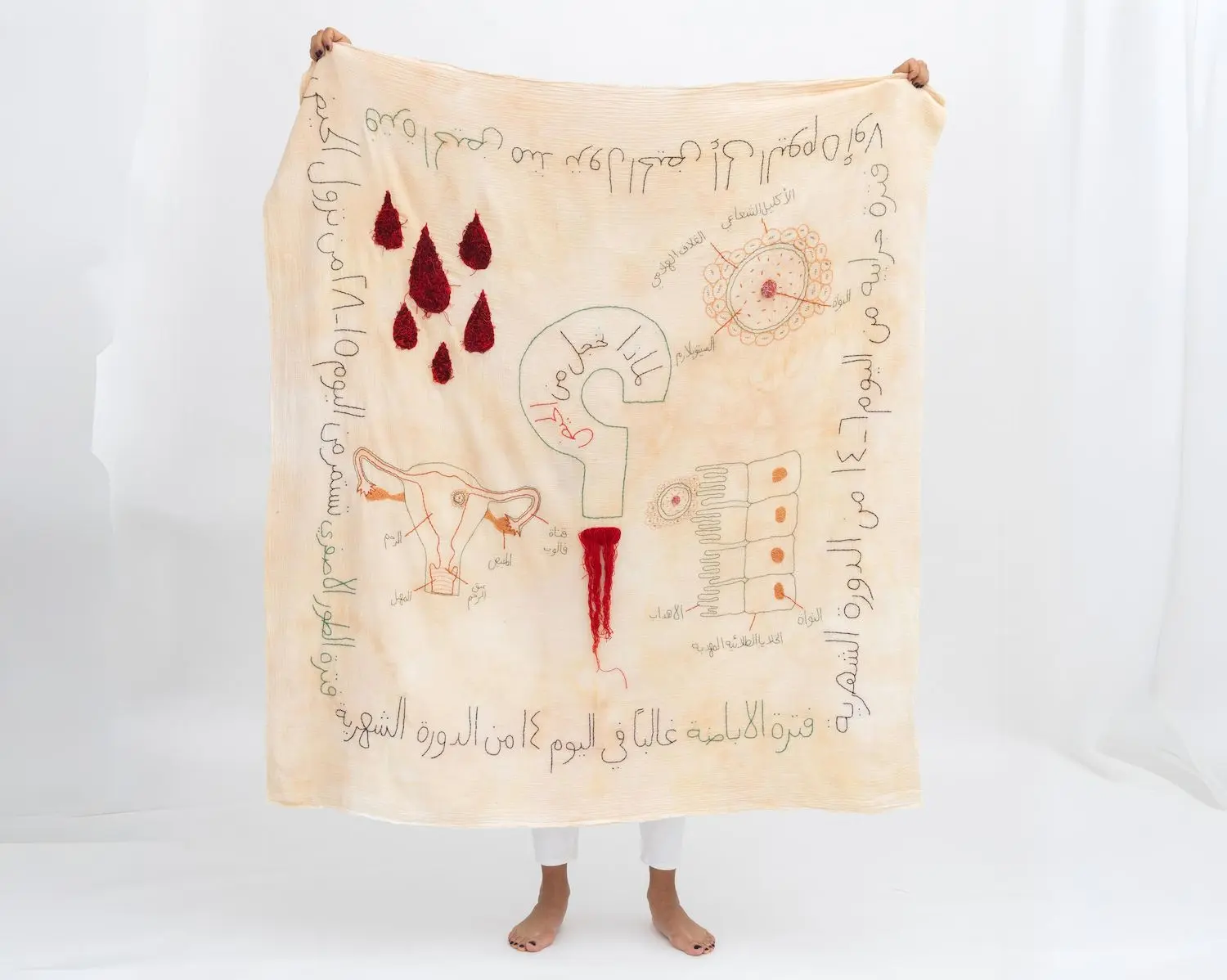
Another key work, The Period Blanket, was created during the COVID lockdowns and approaches menstruation with softness rather than confrontation. By using a blanket as a second skin, Maha reframes a taboo subject into a quiet, intimate space grounded in care and reflection.
Her installations often draw from local healing traditions, botanical printing techniques and spiritual symbolism. Together, these elements invite viewers to slow down and reconnect with ancestral knowledge. Maha’s work exists between ritual and resistance, presenting the body as a site of memory, vulnerability and quiet strength.
Aliyah Alawadhi
Aliyah Alawadhi is an Emirati artist whose practice explores themes of girlhood, adolescence, femininity and the body. Her work is shaped by internet culture, memory and emotional landscapes, reflecting the complexities of growing up in an increasingly digital world.
Aliyah’s visual language is fluid and dreamlike, drawing from fantasy, pop references and personal mythology. Through this lens, she questions how bodies are formed, remembered and imagined, particularly for a generation navigating identity across physical and online spaces.
In projects such as Girl Parts, the body appears fragmented, glowing and constantly shifting. These forms reflect the instability and intensity of adolescence. Rather than presenting girlhood as a fixed identity, Aliyah approaches it as an emotional state — one that is layered with contradiction, tenderness and resilience.
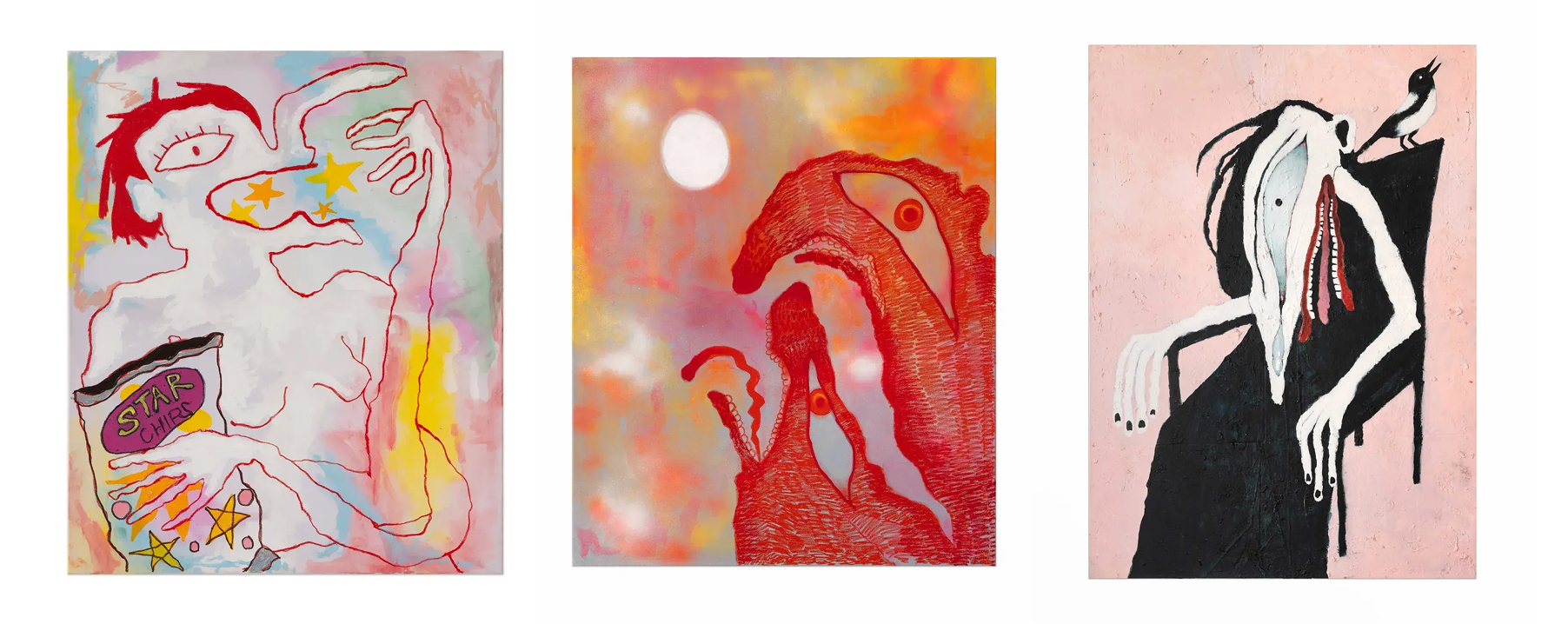
Throughout her work, softness exists alongside rupture. Her paintings and videos blur the line between private emotion and shared experience, creating immersive worlds where vulnerability becomes a source of agency. Aliyah resists easy categorisation, offering alternative narratives for what it means to live in and relate to a body today.
Alymamah Rashed
Alymamah Rashed is a Kuwaiti visual artist whose work centres on the female body as a vessel for emotion, memory and lived experience. For her, the body is not simply physical — it is a container for stories shaped by love, loss, transformation and time.
Her paintings and works on paper often feature abstracted figures and faces, where form dissolves into feeling. Bodies appear porous, allowing inner emotional states to surface through gesture, line and colour rather than clear representation.
Eyes appear repeatedly throughout her work, functioning as thresholds into the self. Rather than serving as conventional portraits, they act as emotional entry points, drawing viewers into layered narratives of grief, healing and self-recognition.

Laila Ajjawi
Laila Ajjawi is a Palestinian street artist who uses large-scale public murals to challenge gender norms and reclaim public space for women’s stories.
Growing up in a refugee camp profoundly shaped her understanding of art as a form of dialogue and resistance. She began painting murals in 2014, viewing walls as platforms for expression, memory and social change.
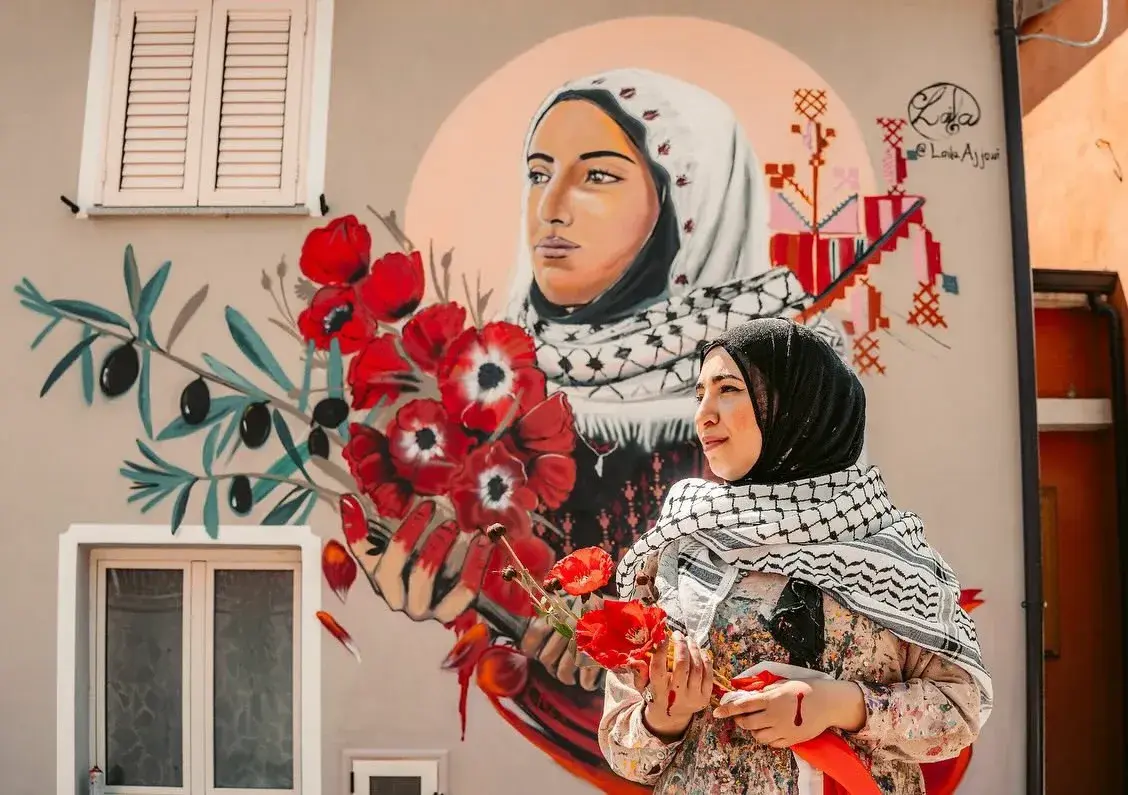
One of her most striking works, Red Anemone, depicts a young woman holding a single red anemone flower. The figure represents Rawan Krayzem, a 20-year-old survivor from Gaza who lost her entire family during an attack while they were sheltering in a school.
The flower she holds — known locally as dahnoun, the red anemone (Anemone coronaria) — carries deep cultural and political meaning. Its vivid red colour has long been associated with the blood of martyrs and the sacrifices of Palestinians. Each spring, anemones bloom across Palestinian fields and hills, often in landscapes marked by conflict and resistance. The flower appears frequently in Palestinian poetry, folklore and folk songs, symbolising love, loss and homeland.
Through her murals, Laila addresses themes of women’s empowerment, visibility and self-determination. By placing these images directly into public space, she asserts that women’s stories deserve to be seen openly — on the street, rather than hidden or confined.
Heba Khalifa
Heba Khalifa is a multimedia artist, photojournalist and painter from Cairo, Egypt. Her work focuses on women’s lived experiences, bodily autonomy and the social expectations imposed through gender roles.
Originally trained in decorative cinema and theatre design, Khalifa later turned to photography as a more immediate and honest way to engage with real lives and untold stories. Alongside her work as a photojournalist, she develops long-term conceptual projects that explore intimacy, vulnerability and identity.
In projects such as Homemade — which initially began on Facebook — Khalifa collaborates closely with women to visually articulate their inner worlds. The work addresses themes including motherhood, body image, trauma and desire. Rather than observing from a distance, she builds trust-based relationships that allow participants to actively shape how they are represented.
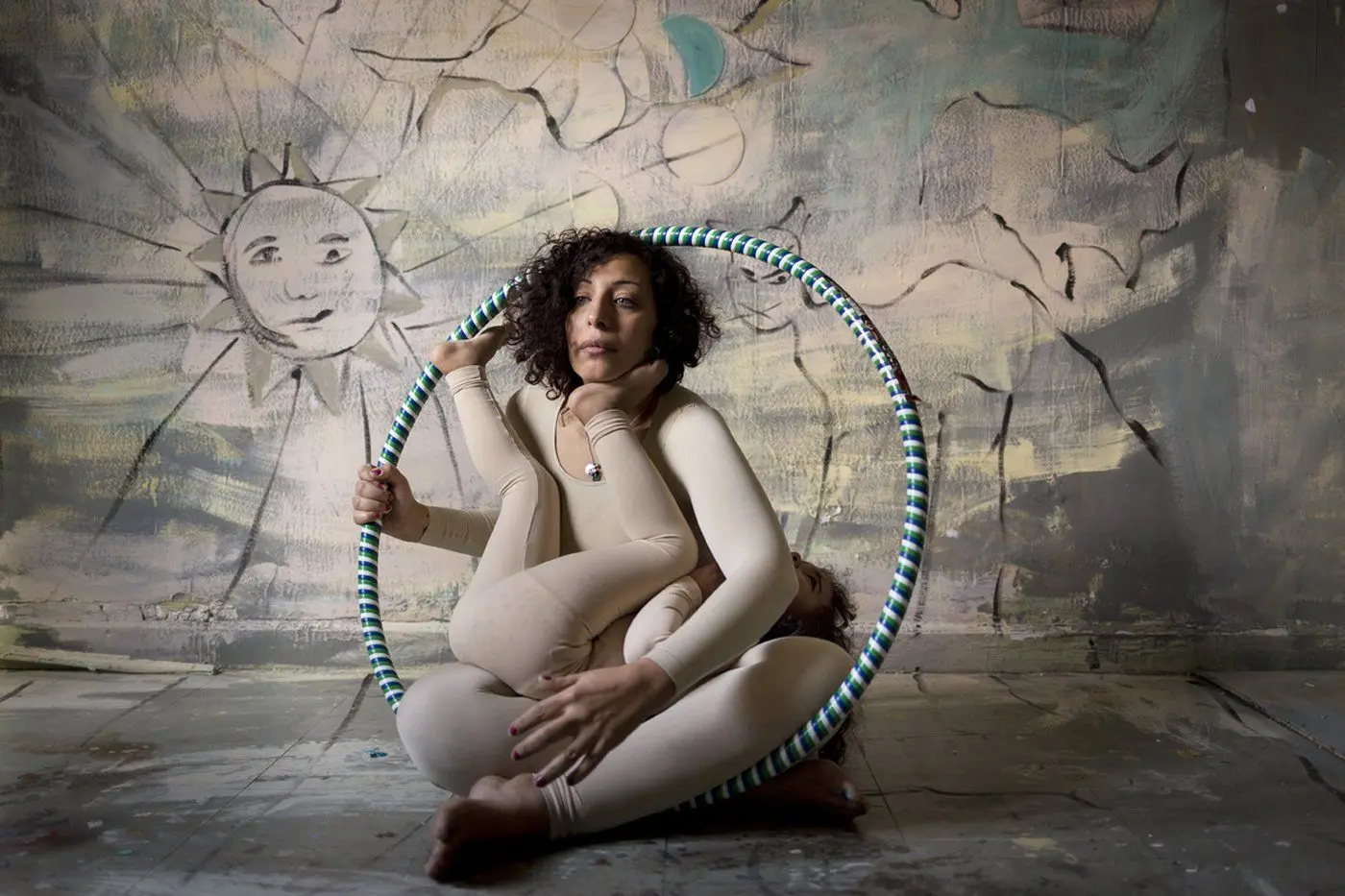
Her self-portraits confront subjects often considered taboo, such as single motherhood and societal judgement. By placing her own body and personal story within the frame, Khalifa collapses the boundary between documentation and personal testimony.
Blending documentary realism with conceptual depth, her practice uses photography as a tool to question how women are seen — and how they come to see themselves.
Latest Posts

From a botanical drinks lab to a London dining heavyweight and a sky-high Asian destination, Dubai’s September openings are worth making plans for
Inner Armor Is Here: Meet Sanaa Ouahmane at a Special Book Signing on September 18

Is a media outlet that is part of our agency and provides basic tools for nurturing your business.


