
In conversation: Pamela Tan turns hidden patterns into public wonder
An interview with artist Pamela Poh Sin Tan on her Manar Abu Dhabi 2025 installation, material dialogue, the power of quiet complexity, and her dream of creating a truly living, ecological sculpture
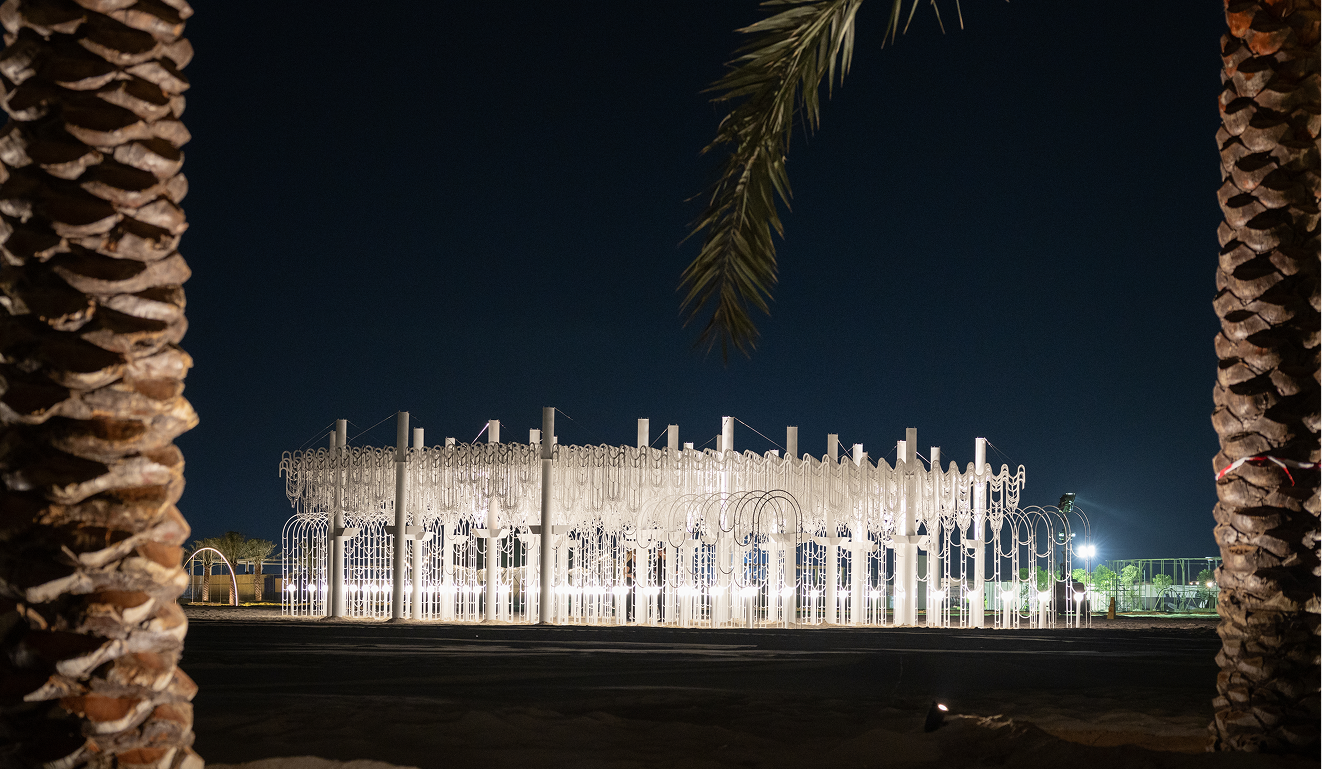
For artist Pamela Poh Sin Tan, a piece of rope is never just rope, and steel is never just steel. In her hands, they become a dialogue, a tangible exploration of tension between strength and softness, the industrial and the organic. This material conversation is at the heart of Poh Sin Studio’s work, which transforms overlooked biological blueprints into breathtaking public installations.
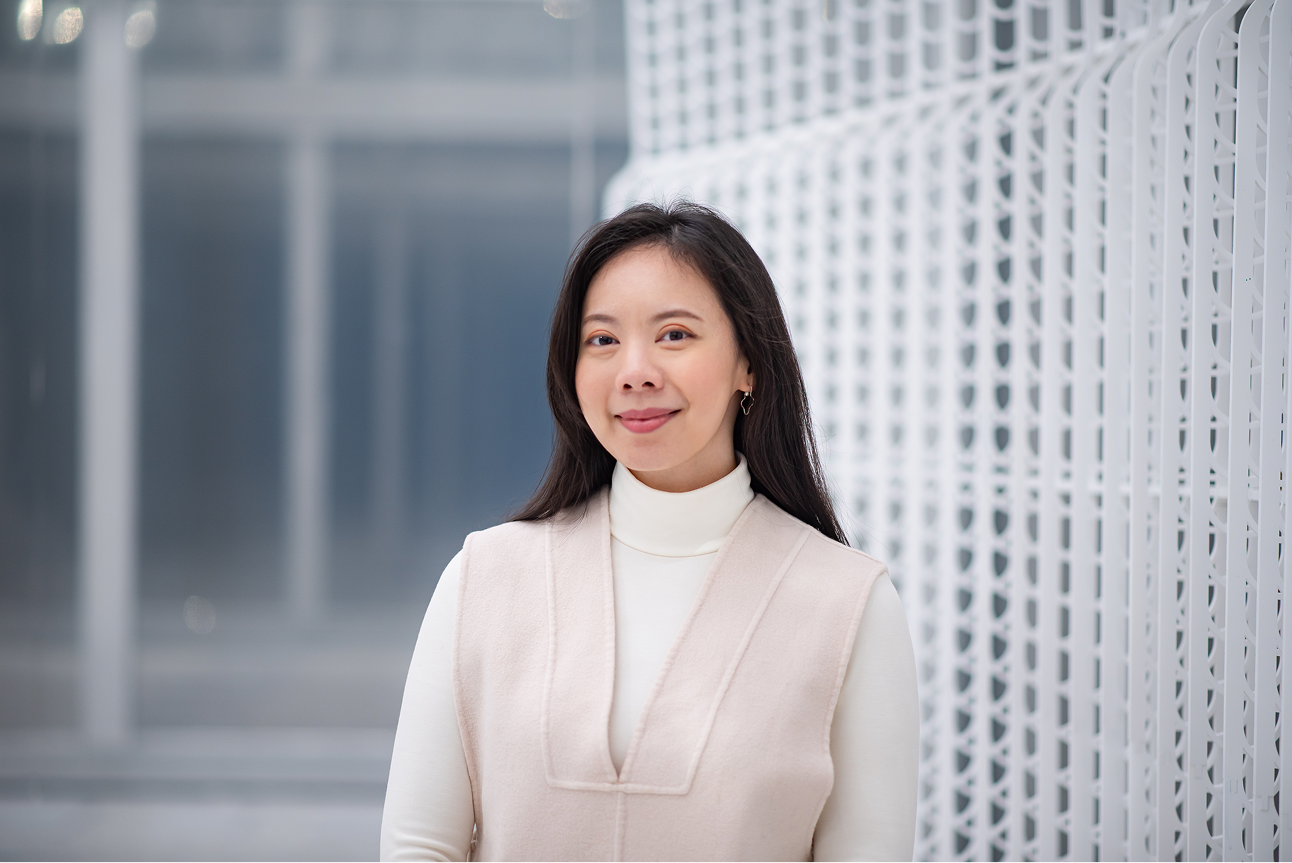
Following a major new commission for “EDEN” at the Manar Abu Dhabi 2025 exhibition, Tan’s practice is reaching a global audience, challenging passersby to see the beauty in the details they typically ignore. We spoke with the artist about her process, the challenges of creating for a protected mangrove park, and how she balances her personal vision with the demands of running a thriving studio.

Your practice emphasizes "vulnerability as a strength" and finds beauty in overlooked details like plant veins or mechanical systems. What draws you to these hidden elements, and how do you translate their quiet complexity into large-scale public art?
I believe strength is how something stands in silence. I’ve always been fascinated by the systems we tend to overlook, such as plant veins, root networks, or even the structure of a spider web. Nature often shows us how the bare minimum is enough to support a whole ecosystem. A spider web, for example, is delicate yet perfectly engineered. That quiet balance between fragility and resilience draws me in. When I create large-scale installations, I try to preserve that sense of quiet complexity, translating intricate, often invisible systems into spatial experiences that invite people to pause, reflect, and feel connected to something larger than themselves.
You've said that public art is a "powerful catalyst for urban renewal and psychological well-being". Could you share a specific moment or feedback you've received that made you feel your work truly achieved this goal of providing "reflection, joy, or connection"?
For me, the moment came after installing Sunnyside Up at the MRT Pasar Seni transit hub in Kuala Lumpur. What began as a grey, overlooked staircase was transformed into a pathway bathed in warmth and energy through bright yellow hues.
Later, a commuter told me, “This work made my day. I started using the stairs instead of the escalator because it’s lovely to walk through.” Simple words, but they meant everything. In that fleeting moment of daily routine, the installation created a pause, a moment of unexpected joy. That’s when I felt public art had fulfilled its role: not just to decorate, but to uplift, comfort, and reinvigorate a shared space.
Your works often combine soft materials like rope with hard ones like metal. What does this material dialogue mean to you, and what challenges does it present?
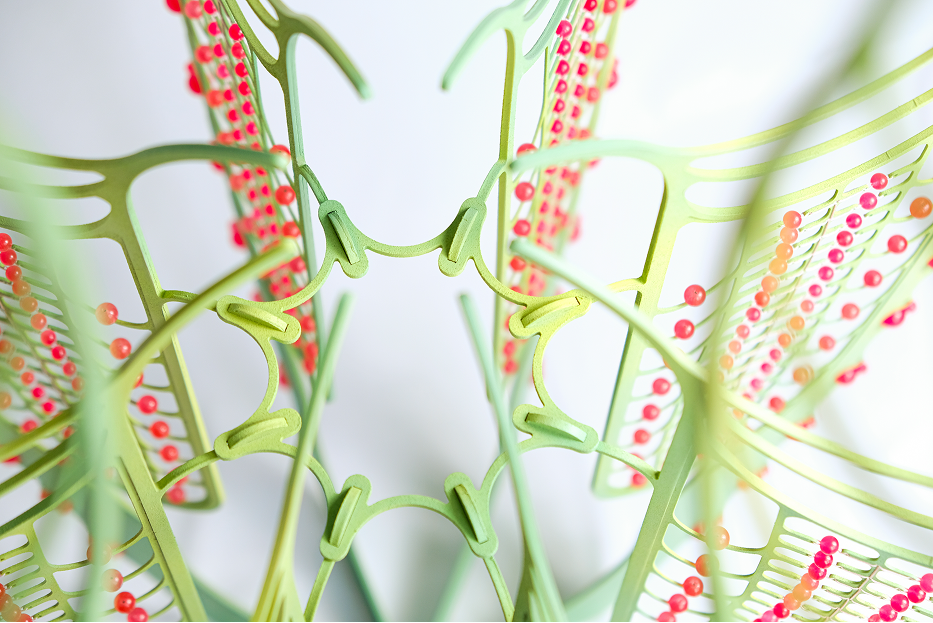
To me, metal and textile are like bones and tissues. Textile has a sense of familiarity and intimacy, from living room carpets to clothing fabrics. It carries warmth and memory. Textile has a diaphanous nature; the way it lets light through or gently shifts with air gives the structure a kind of breath.
In contrast, metal is the skeletal framework. It holds everything together delicately.
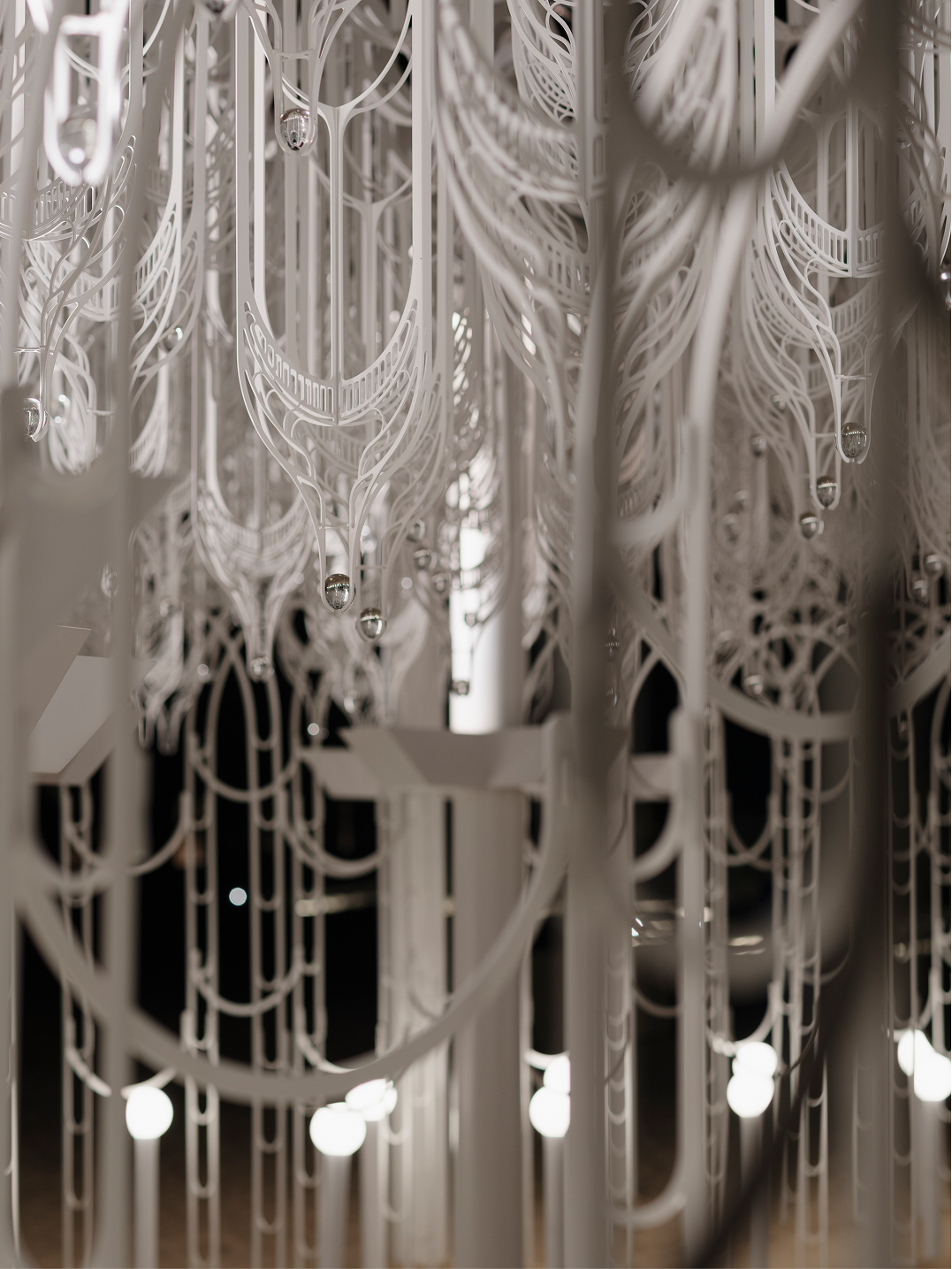
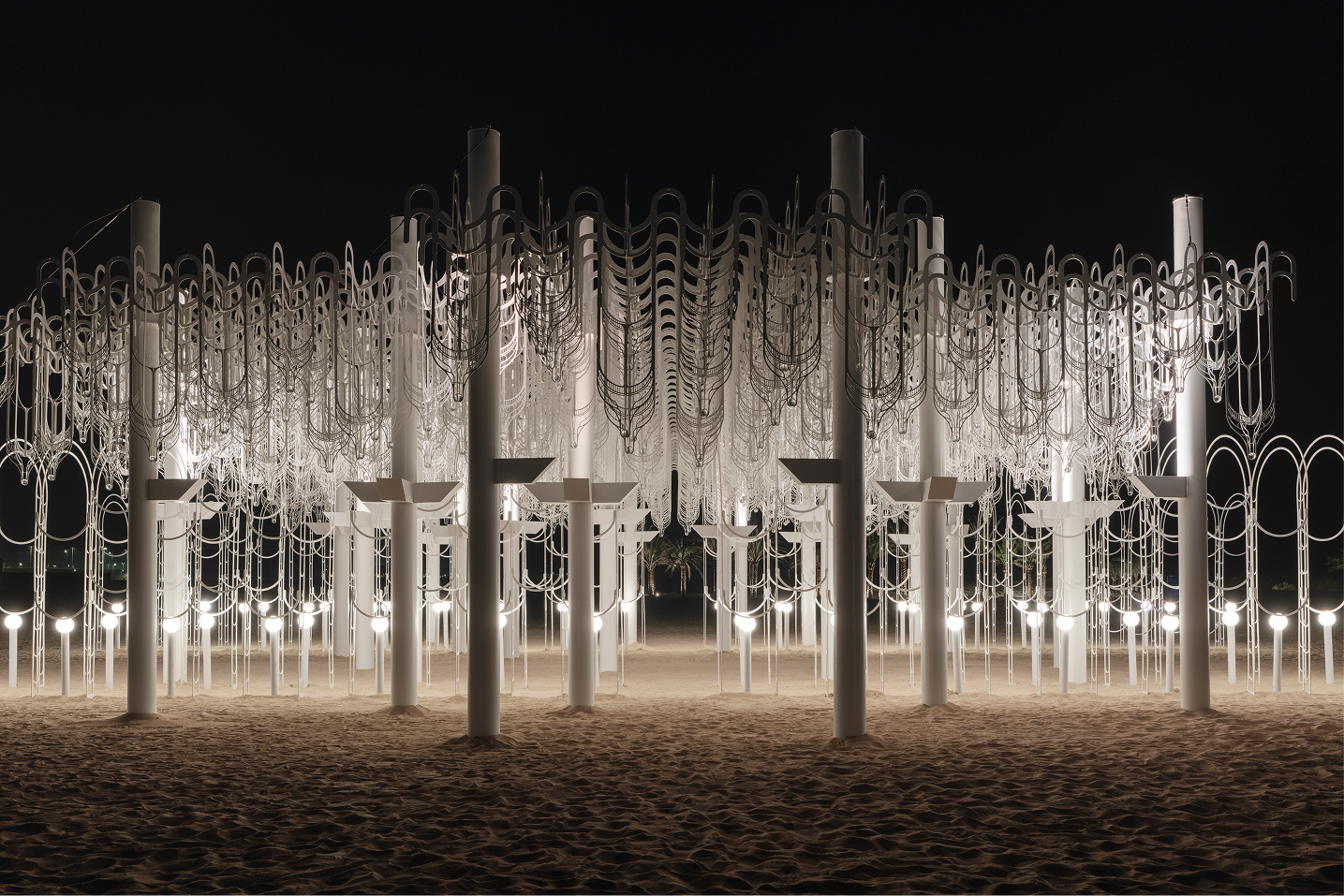
Your installation "EDEN" was featured prominently at Manar Abu Dhabi 2025 on Jubail Island. Could you tell us about the concept behind this steel-and-glass constellation and how you approached creating a work for the unique context of the mangrove park?
EDEN, to me, is about interconnectedness: the idea that everything is part of a larger living system. With that, I feel it’s naturally fitting in the Mangrove Park.

Manar Abu Dhabi's theme was "The Light Compass," positioning light as both a guide and a medium. How did you interpret this theme in "EDEN," and how does light function as a material in your work more broadly?
A quiet sense of connection. For Eden, I imagined light as a heartbeat, pulsing gently from within the floating cloud of vines. The whole body of the work feels like a living organism. It’s alive and breathing.
Poh Sin Studio emphasizes fostering relationships between people, their communities, and their surroundings. How is this philosophy embedded in the daily operations and project lifecycle of your studio?
At Poh Sin Studio, the process is never just about the final thing. It’s about the relationships we build along the way. Everyone involved, from my studio team, engineers to fabricators, shares a sense of curiosity and care. There’s a mutual appreciation for craftsmanship, technical challenge, and the poetry of making something meaningful.
Each specialist brings their own spark, their excitement to see how this unique body of work comes alive. That shared purpose creates a kind of camaraderie that’s rare and deeply felt. It’s not just collaboration; it’s connection. And that connection, I believe, gets embedded into the work itself.

Wearing the hats of both the visionary artist and the studio CEO requires different, often conflicting, skillsets. When you're in the middle of a complex installation, how do you navigate the moment where the artist's perfect vision has to have a conversation with the manager's practical reality?
It’s not always easy. The biggest challenge is finding that balance between vision and reality to make things work. I’m really grateful to have a team I trust, who help me navigate the chaos when things get complex. What keeps us grounded is knowing that we all share the same goal. That sense of alignment makes all the difference.
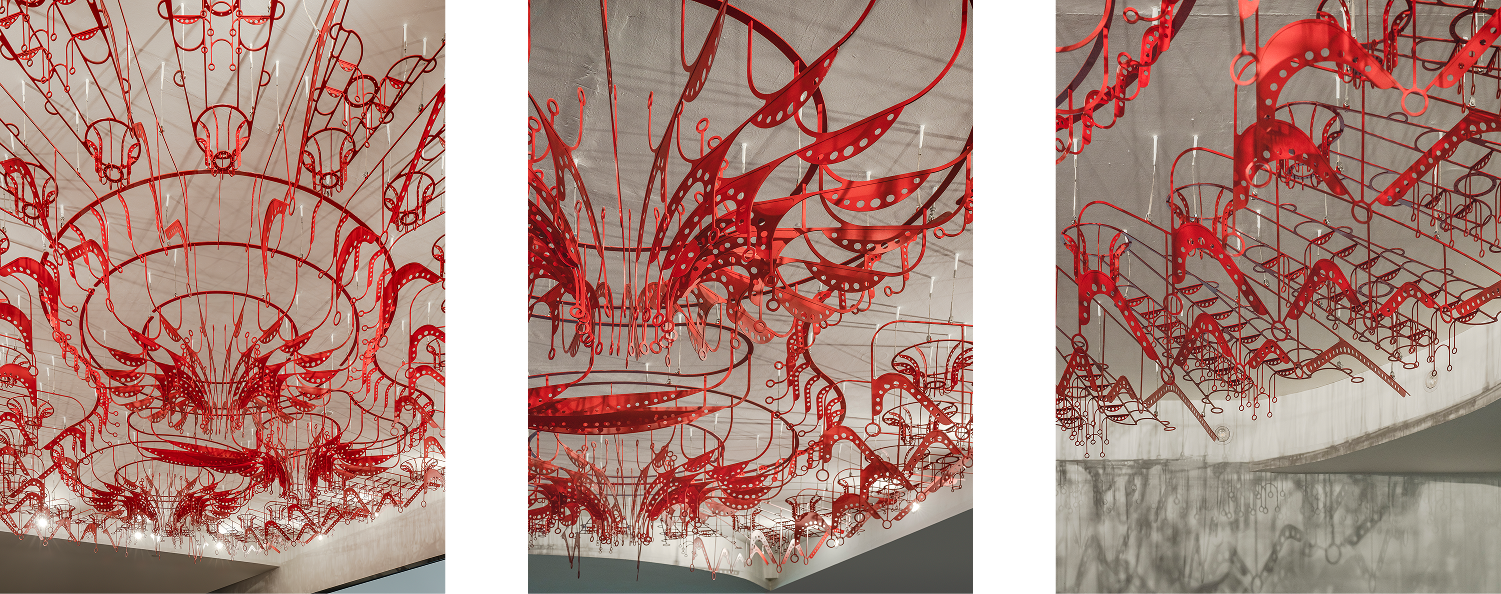
If your earlier work, like "Structural Resonance," was about finding the hidden music in architecture, and "EDEN" is about creating a new world within nature, does this signal a shift for you, from interpreting existing spaces to building new ecological ones?
Both Structural Resonance and EDEN are inspired by hidden systems – what lies behind the visible. Structural Resonance explored the unseen logic of architecture and engineering, while EDEN is rooted in nature’s organic systems. They may seem like very different subjects, but they share a similar fascination: that quiet complexity working behind the scenes.
Imagine a future project with absolute creative and budgetary freedom. What is the dream project that Poh Sin Studio hasn't had the chance to create yet? What space would it occupy, and what feeling would it leave people with?
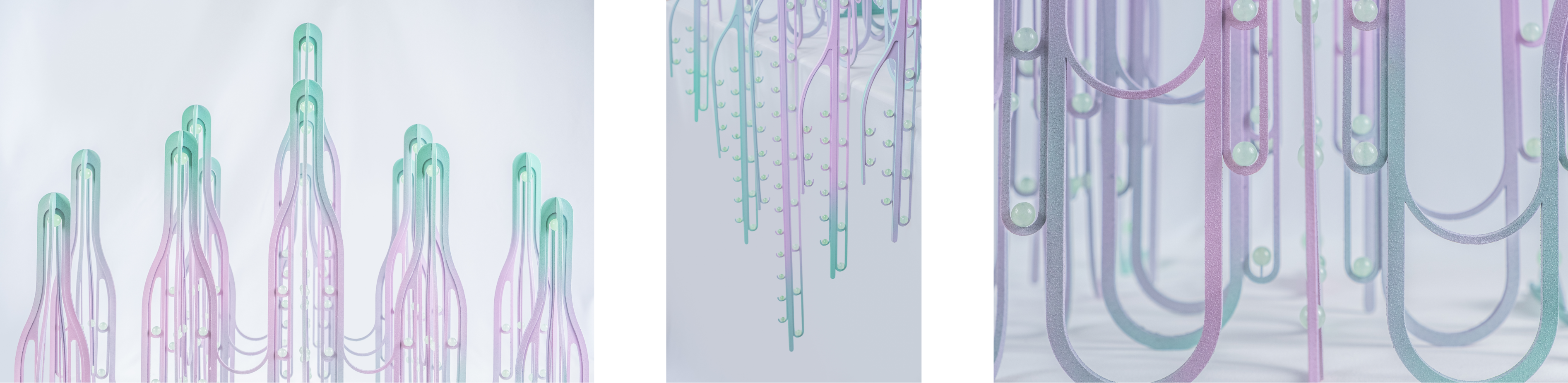
I’d love to expand on my solo work Specimen Garden, but in a way that fully responds to its environment, not just visually, but ecologically. Imagine a living sculpture that reacts to weather, wind, even nearby animals. A piece that changes with the time of day and shifts across seasons like nature itself, never static, always becoming.
Because the work is inspired by underwater specimens, it would be even more meaningful if it could eventually return to the ocean, perhaps as part of a reef restoration. That idea of a sculpture having a second life as a habitat… that would be the dream. Something beautiful, meaningful, and alive.
Latest Posts

At Dubai AI Festival 2026, the academy will showcase its hands-on training programs designed to equip enterprises, universities, and professionals with the skills to defend against emerging AI threats
After nearly a decade away, the Dubai International Film Festival is preparing to return with a fresh identity, a stronger focus on regional storytelling, and new opportunities for the film industry

Is a media outlet that is part of our agency and provides basic tools for nurturing your business.


