
Women Who Shaped the Gulf’s Artistic Voice
Revisiting the women who captured a region in transition — and redefined its artistic voice
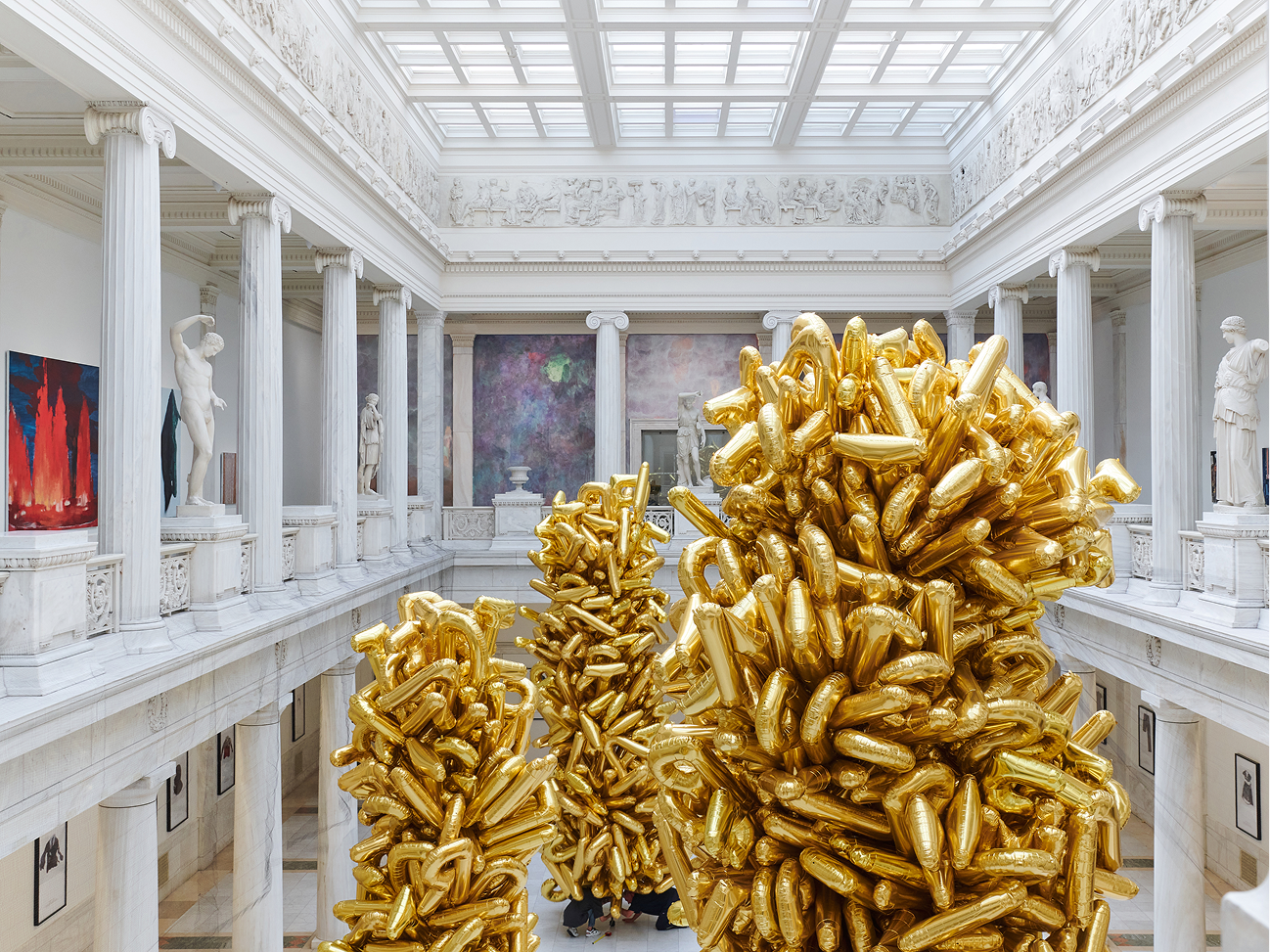
Long before the Gulf became a global cultural destination, its artistic landscape was shaped quietly — and often against the odds — by a small group of women who chose to create.
Working during the 1970s and 1980s, at a time when institutional support for the arts was still developing, these artists documented a region in motion. Through their work, they captured fragments of daily life, evolving identities, and the social realities of their time — often placing women, heritage, and memory at the center of their narratives.
For years, many of these voices remained under-recognized. Today, however, a renewed focus on regional art histories — driven by exhibitions, archives, and a new generation of collectors — is bringing their legacies back into the spotlight.
These are four women whose work didn’t just reflect the Gulf — it helped define it.
Mounirah Mosly
A pioneer of visibility in Saudi Arabia
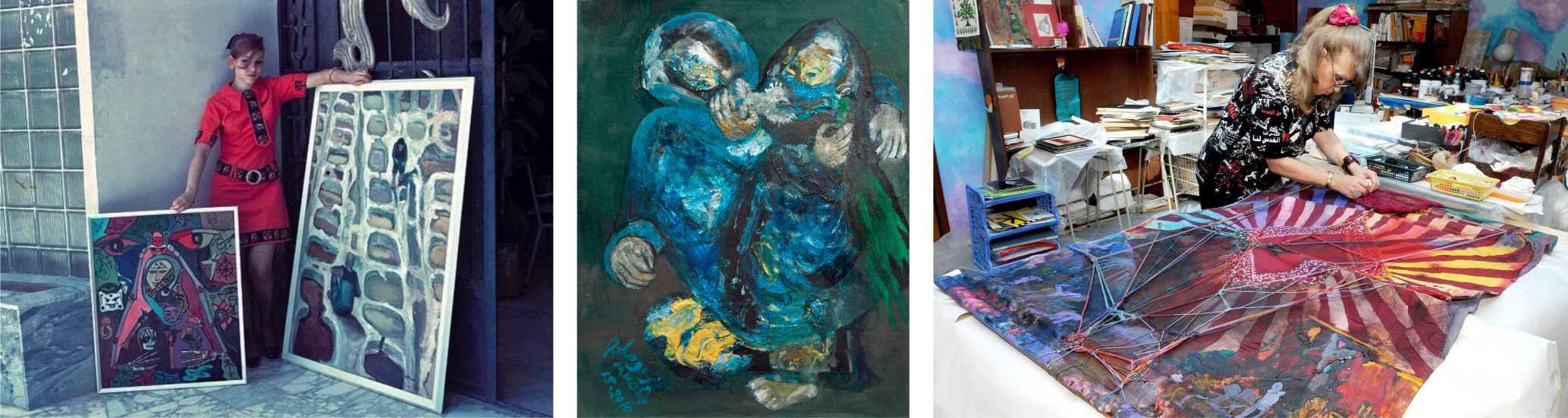
Emerging at a time when opportunities for female artists were extremely limited, Mounirah Mosly became one of the first women in Saudi Arabia to publicly exhibit her work — doing so while still in her teens.
Her artistic journey took her from Jeddah to international study environments, before returning to contribute not only as an artist, but also as a cultural builder. Alongside her own practice, she worked in design, opened a gallery space, and supported younger generations through art initiatives.
Her work moves fluidly between figuration and abstraction, often reflecting themes of nature, everyday life, and cultural memory — quietly preserving moments of a changing society.
Najat Makki
The artist who expanded what Emirati art could be
Born in Dubai, Najat Makki’s path was defined by both ambition and firsts.
Supported by a government scholarship, she pursued her studies abroad at a time when such opportunities were rare — eventually becoming the first Emirati artist to earn a doctorate in art.
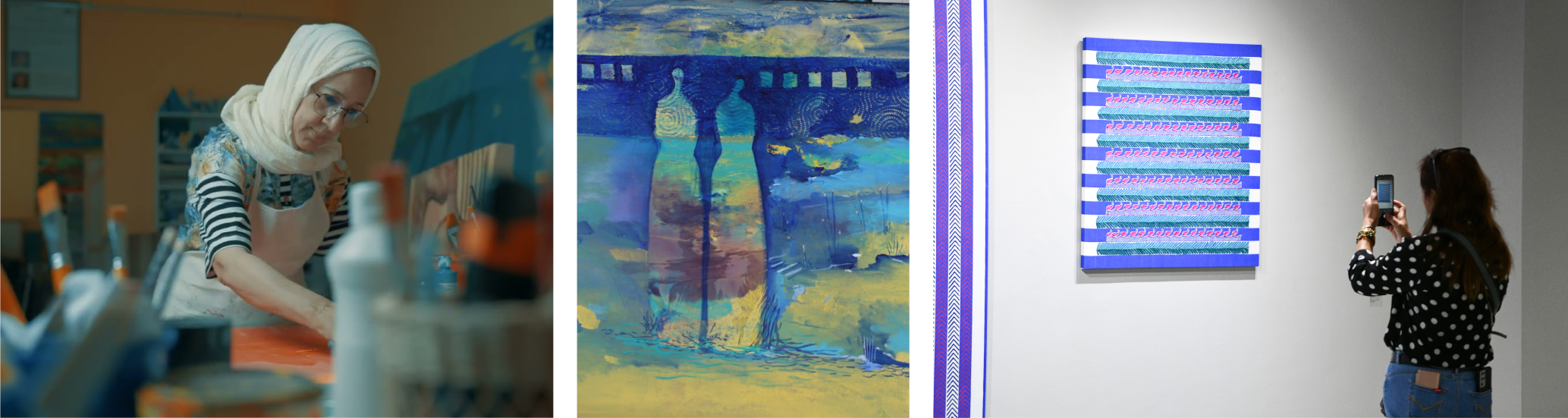
Her practice is marked by experimentation. Moving beyond traditional painting, she explored materials ranging from metal to textiles, creating works that feel layered both visually and conceptually.
Her themes often shift between personal and collective — from representations of women to reflections on conflict and transformation — positioning her as one of the most influential figures in the UAE’s cultural evolution.
Thuraya Al-Baqsami
Art as resistance and expression
Few artists have navigated as many mediums — or as many historical moments — as Thuraya Al-Baqsami.
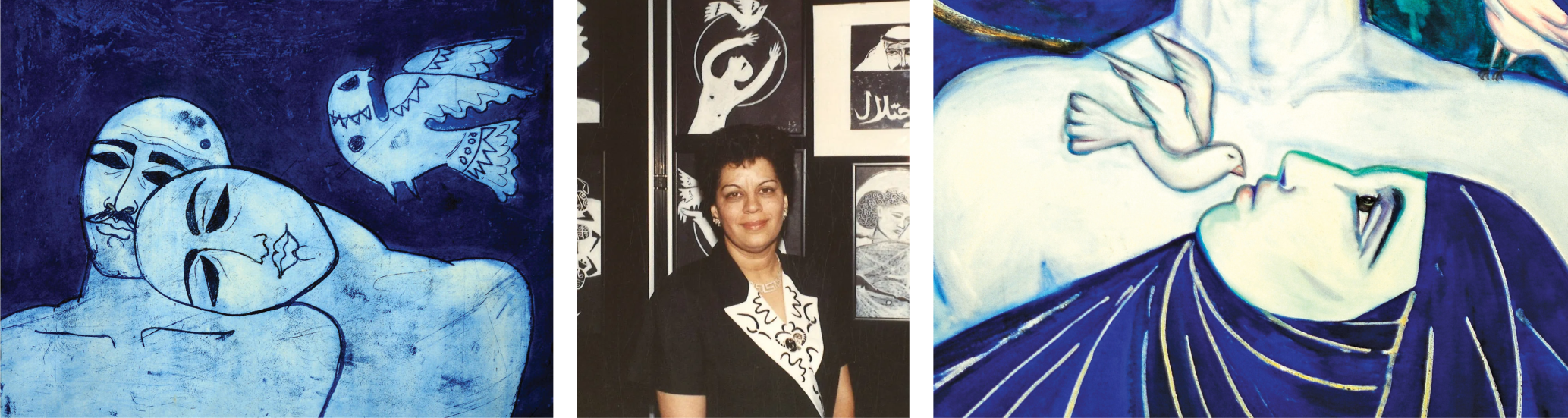
Over decades, her work has spanned painting, printmaking, and engraving, always anchored by a strong visual language and a recurring focus on the female figure.
But it was during moments of political upheaval that her work took on a new urgency. Choosing to remain in Kuwait during times of conflict, she used art as a form of resistance — creating powerful visual statements that spoke directly to occupation, identity, and resilience.
Her work today exists not only as artistic expression, but as historical testimony.
Safeya Binzagr
Preserving heritage through art
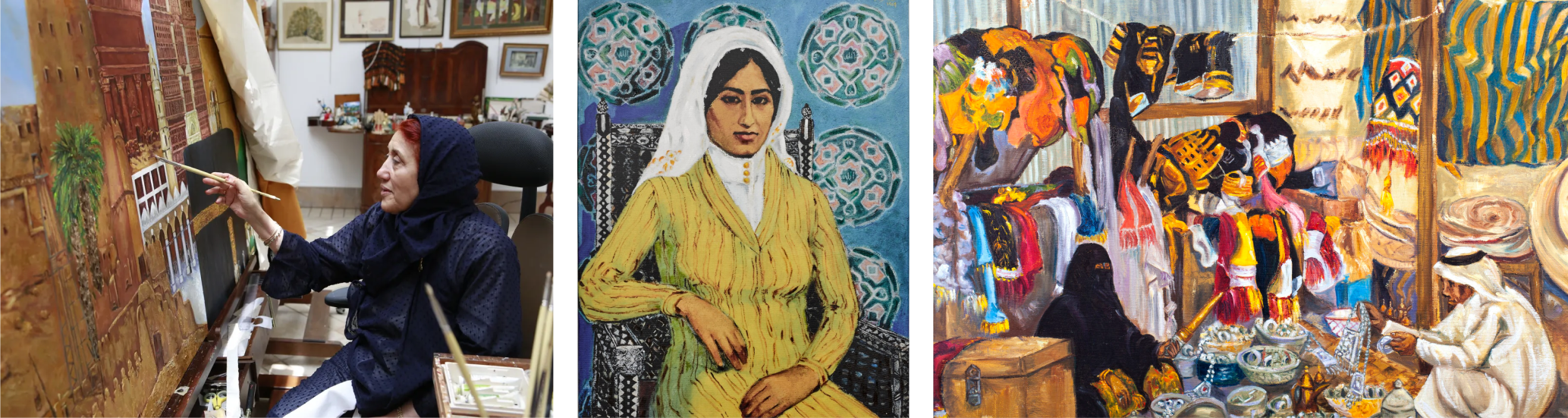
Safeya Binzagr’s work stands as a visual archive of Saudi heritage.
Through detailed, narrative-driven paintings, she documented everyday life — from architecture and clothing to rituals and social traditions — capturing moments that might otherwise have faded over time.
Beyond her artistic output, Binzagr also played a key role in education, establishing a cultural space dedicated to art and learning in Jeddah — a legacy that continues to influence new generations.
Her recent record-breaking auction results only reaffirm what the region has long known: her work is both culturally significant and timeless.
Why Their Stories Matter Now
Today, as the Gulf positions itself at the forefront of the global art conversation, these artists feel more relevant than ever.
They worked without the infrastructure that now defines the region — no major art fairs, no global institutions, no established market.
And yet, they created.
Their work laid the foundation for what we now see as the Gulf’s cultural identity: layered, complex, and deeply rooted in both history and transformation.
Revisiting their stories isn’t just about looking back —
it’s about understanding where the future of regional art truly begins.
Latest Posts

From architectural couture and sculptural jewellery to modern tailoring and collectible accessories, a new generation of Saudi designers is translating the Kingdom’s heritage into a fashion language of its own
From banks and property companies to tech brands, some of Dubai’s most familiar Metro station names are actually multimillion-dirham advertising deals. Here’s how the system works

Is a media outlet that is part of our agency and provides basic tools for nurturing your business.


