
Sanaa Ouahmane on Inner Armor
The Wait Is Almost Over: Sanaa Ouahmane’s Inner Armor Launches September 18
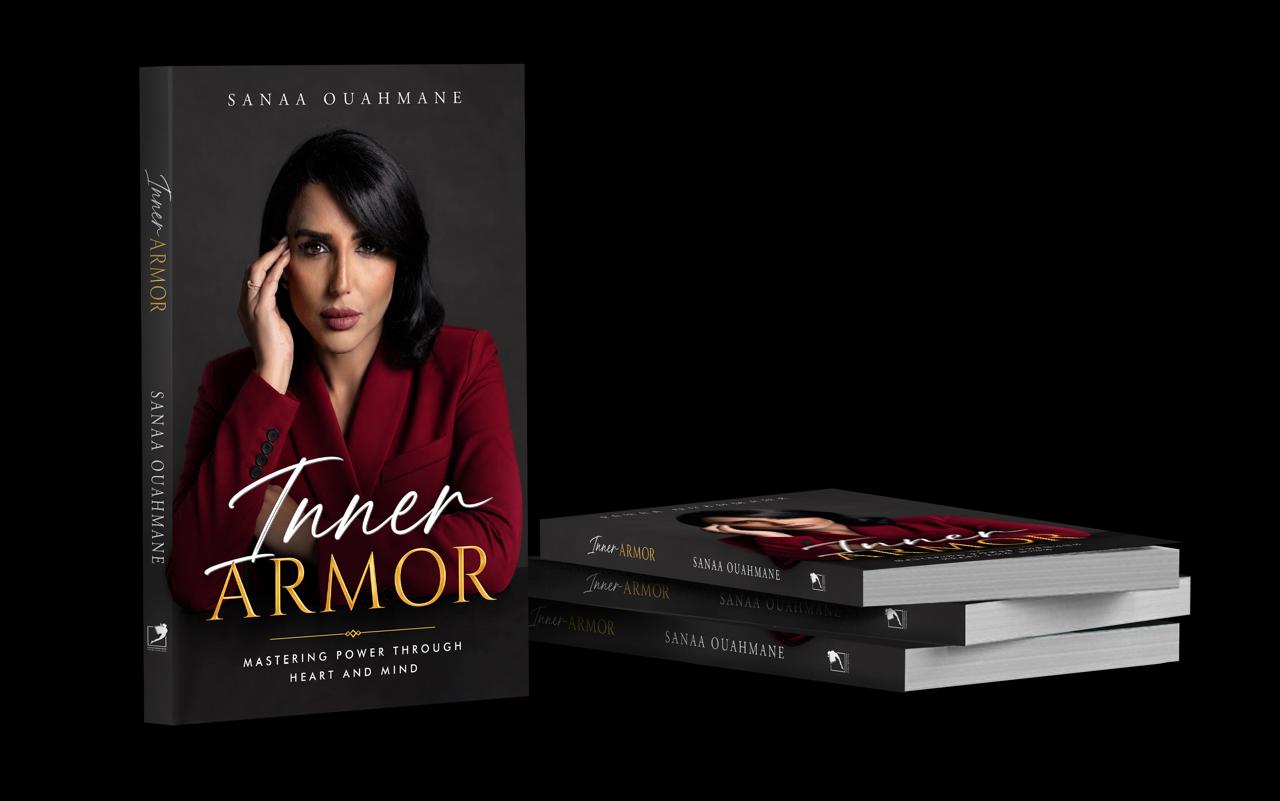
Behind every powerful woman, there is usually a story the world never fully sees.
For years, Sanaa Ouahmane has been recognised as one of the most influential leaders in the GCC's automotive and mobility industry, a woman who built her name in boardrooms, leadership circles and one of the region's most demanding sectors.
But beyond the titles, achievements and public image, another story was quietly unfolding in parallel.
Now, for the first time, Sanaa is preparing to share that story with the world through her upcoming book Inner Armor, a deeply personal reflection on ambition, identity, resilience and the invisible emotional battles behind success.
Inspired by the little girl she once was, the one who refused to shrink her dreams to fit society's expectations, the book explores what it truly means to protect your vision of yourself in a world constantly trying to redefine it for you.
Ahead of the highly anticipated release, we sat down with Sanaa to speak about the emotional journey behind the book, the moments that shaped her, and the message she hopes women everywhere will carry with them long after the final page.
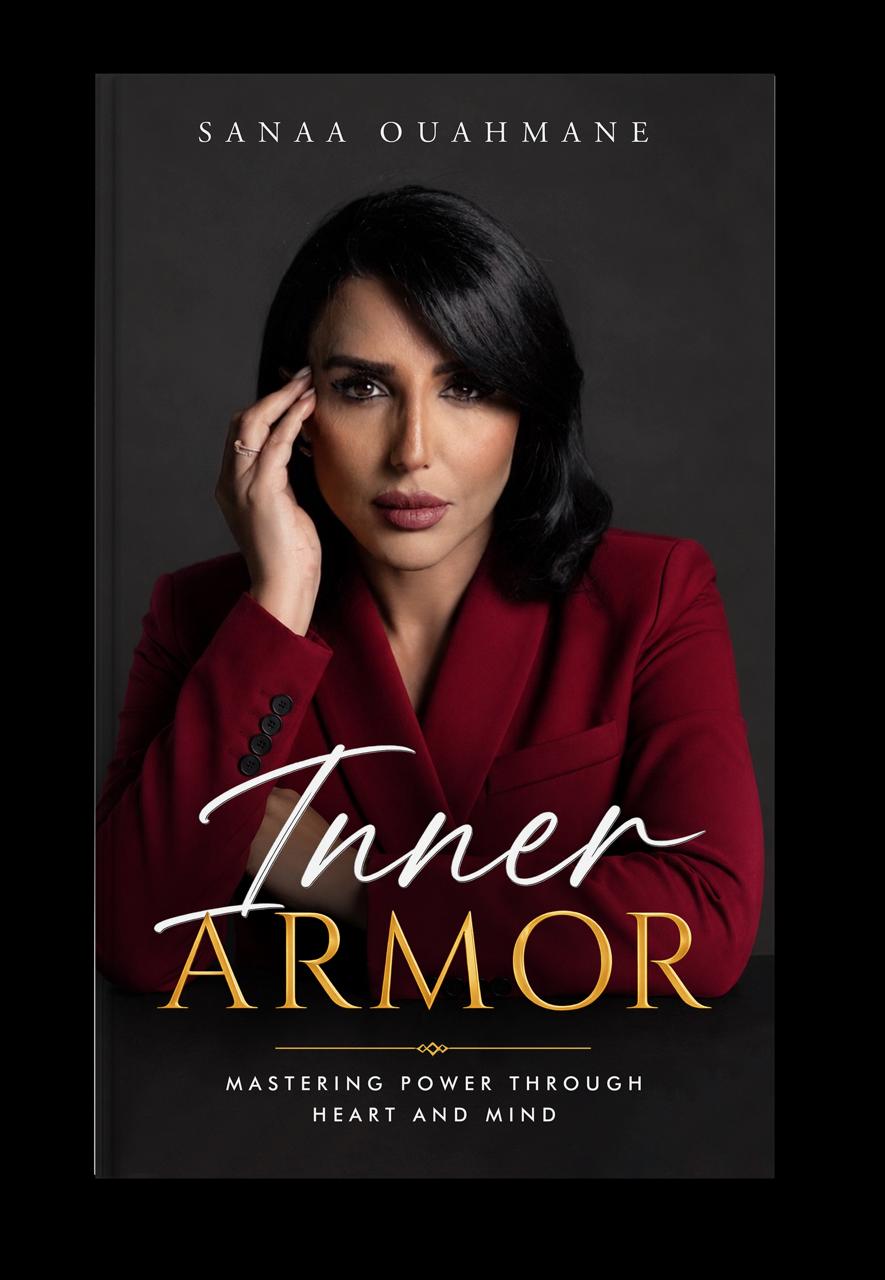
For many people, Inner Armor feels unexpectedly personal coming from someone known for strength, leadership and business success. What was the emotional turning point that made you decide: “I’m finally ready to write this book”?
For most of my life, I believed strength meant surviving quietly. Moving forward no matter the pressure. Performing no matter the exhaustion. Carrying responsibility without allowing myself to fully feel the weight of it.
I became very good at leading, building, transforming, and surviving in environments where weakness was never an option. But somewhere along the journey, I realized that while the world could see the woman I became, very few people knew the little girl, the pressure, the loneliness, the fears, and the emotional battles that built her.
Since graduation, I have worked almost entirely in male-dominated industries. I was so focused on proving myself, surviving, and succeeding that I became disconnected from many of the emotional conversations women were having about identity, ambition, motherhood, relationships, sacrifice, and self-worth.
Then something changed when I arrived in the UAE and started speaking publicly at conferences, leadership forums, and panels. After the events ended and the rooms became quieter, women would stay behind to speak to me privately. Some spoke about fear. Others about loneliness, exhaustion, pressure, or the guilt of trying to become more without disappointing everyone around them.
And for the first time, I realized something I had never expected: my voice was reaching them not because it sounded strong, but because it sounded real.
Honestly, I never imagined that another woman could see herself in my story. I never imagined that my experiences, my scars, or even my silence could one day help someone else feel understood.
The truth is, I was already writing long before this book existed, but only for myself. Writing was my private refuge. A place where I could breathe, clear my mind, process emotions I never had time to feel, and survive the noise of my life.
But once I realized that other women and younger generations genuinely needed that honesty, something shifted deeply inside me. I asked myself: why should I keep these words for myself if my journey can help someone else survive theirs?
That is the moment Inner Armor stopped being private writing, and became a responsibility.
The idea of “the little girl behind the titles” became one of the most powerful themes in your recent reflections. Who was that little girl before the world told her who she should become, and how much of her still exists in you today?
The little girl behind the titles was deeply imaginative, emotional, observant, and full of dreams that often felt bigger than the reality surrounding her. She grew up without her mother by her side for an important part of her childhood, which created an emotional absence very early in her life and pushed her to build a strong inner world long before she understood why.
She also grew up between different homes because her parents were not together. As a child, she constantly had to adapt to the rules, expectations, and realities of other people’s worlds. She moved between her parents’ house, her grandmother’s house, her father and stepmother’s house, then later her mother and stepfather’s house. Very early in life, she understood what it meant to emotionally adjust in order to survive environments she did not choose.
Whenever she was unhappy with the reality of her life, she escaped into a world she created inside her own imagination. That world became more than an escape. It became hope. It became freedom before freedom truly existed in her reality. When sadness, restriction, or disappointment felt too heavy, that invisible world reminded her that another life was possible, that one day she would be able to choose her own path, build her own identity, and finally have a place she could truly call her own.
Over time, that imaginary world stopped being only a refuge and slowly became an objective. The dreams she once built silently in her mind became the life she later fought to create in reality.
She was never dreaming about titles or positions. She was dreaming about freedom, possibility, becoming someone she could be proud of, and building a life larger than fear. And although the world slowly teaches women who they should become, I believe a part of that little girl never truly disappears.
Every morning, while getting ready for work, I still see that little girl in the mirror. She reminds me that I am still on the right path regardless of the circumstances, the pressure, or the challenges life places in front of me. She reminds me why I started, what I survived, and how far dreams can travel when they are protected with resilience and courage.
She still exists in me through my intuition, my emotional depth, my creativity, and my refusal to stop evolving. The difference is that today, the woman carries the discipline, resilience, and courage to transform those dreams into reality.
You built your career in one of the GCC’s most demanding and traditionally male-dominated industries. Were there moments throughout your journey when you felt pressure to become “smaller,” quieter or more acceptable in order to succeed?
Absolutely. When you build a career in highly demanding and traditionally male-dominated industries, there are moments where the pressure is not only about performance, but also about presence. Sometimes the environment quietly encourages women to become smaller, less direct, less ambitious, or less visible in order to remain acceptable.
What I learned over time is that this pressure rarely comes through explicit words. Institutions today often protect women formally. The pressure comes more subtly, through looks, perceptions, exclusion from certain circles, silent resistance, or things said and done quietly in the background. It lives in the invisible dynamics that make you feel you need to constantly prove your legitimacy.
I experienced moments where confidence in a man was interpreted as leadership, while the same confidence in a woman could sometimes be perceived differently. There is often an unspoken expectation for women to constantly balance strength with reassurance so they do not appear “too much” for the room.
But I never made myself smaller to make others feel comfortable. What I chose instead was silence, discipline, and hard work. I allowed my results, my resilience, and the impact of my work to speak on my behalf and tell people who I truly was.
I always stood for my values and refused to give up on them, but I also learned that strength does not always need to be loud. Sometimes leadership requires strategy, emotional intelligence, patience, and knowing when silence is more powerful than reaction. But whenever I felt injustice, disrespect, or unfairness, I never hesitated to raise my voice and defend what I believed was right.
I did not want it to become harder to survive in those environments. I wanted to become more grounded in who I truly was.
This evolved into a gender-intelligent mindset. Instead of spending my energy proving what a woman can do, I started asking a different question: how can men and women complete each other’s strengths, so that nobody in the room is competing on gender, and everybody is competing together on the goals in front of us. That shift changed everything about how I led, and about how the people around me worked together.
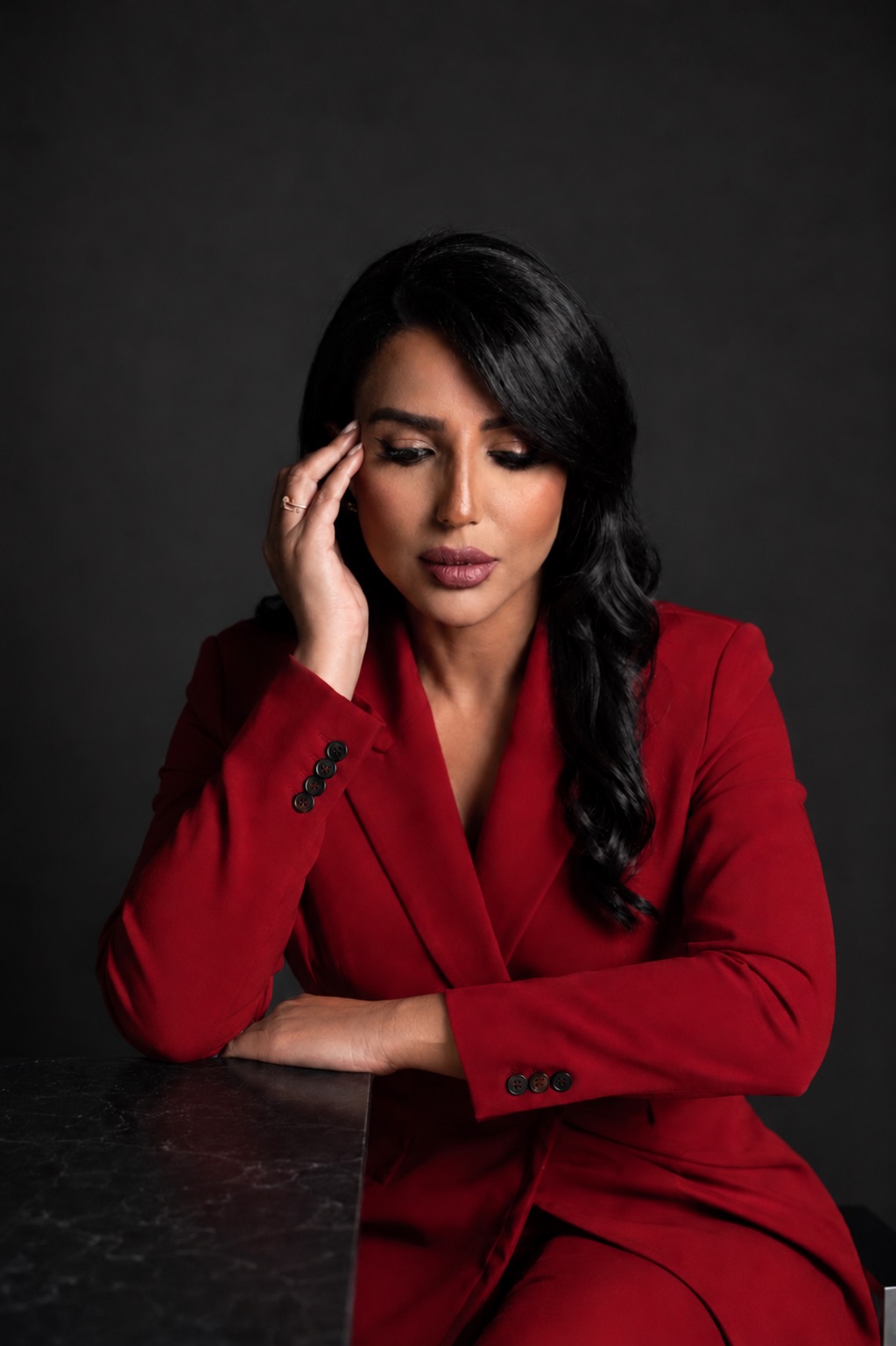
What do you hope women will feel when they read Inner Armor? Is there a message you wish more women heard earlier in their lives or careers?
More than anything, I hope women feel that they are not alone.
We all carry pain, scars, disappointments, fears, and silent battles that the world often cannot see. But I also want women to remember that beyond the pain, there are still dreams, hope, possibilities, and another version of themselves waiting to exist.
Do not let pain define your entire identity. Do not let disappointment convince you to stop dreaming. And do not allow difficult chapters of your life to emotionally weaken the woman you are still becoming.
I want women to feel that they can survive pressure without losing themselves. That they can lead, love, evolve, fail, rebuild, and still remain worthy of the life they dream about.
So many women silently carry exhaustion, guilt, self-doubt, and the pressure of trying to become everything for everyone. I hope this book reminds them that strength is not perfection. Strength is remaining connected to yourself while life tries to pull you in different directions.
If there is one message I wish more women heard earlier, it is this: do not abandon yourself to be accepted.
Do not make yourself smaller to protect other people’s comfort. Do not confuse love with sacrifice without limits. And do not spend your life waiting for permission to become who you are capable of becoming.
After writing this book and revisiting so many personal chapters of your life, how has your own definition of strength changed? And what does “success” mean to you now compared to 20 years ago?
Twenty years ago, and honestly still today, success for me was never optional. I was not born to remain unseen, voiceless, or limited by the circumstances around me. Very early in life, success became a necessity because I always felt there was a bigger life waiting for me beyond the reality I was born into.
At the beginning of my career, success was strongly connected to visible achievement: growth, recognition, leadership positions, financial independence, and the ability to survive highly demanding environments. In competitive and male-dominated industries, I quickly understood that toughness was often necessary to protect your credibility and earn your place. Softness was frequently perceived as weakness, so resilience, discipline, and emotional control became part of my survival mechanism.
Writing this book forced me to look back at the whole road at once, and that is a view we rarely give ourselves, because we are often our own harshest critics. Revisiting those chapters reminded me how far the journey has actually traveled, and how much of it I had never allowed myself to feel.
But with time, my understanding of both strength and success evolved.
I realized that success is not always visible. Sometimes success is protecting your peace. Sometimes it is rebuilding yourself after disappointment. Sometimes it is remaining aligned with your values despite pressure. And sometimes success is simply becoming the person you once dreamed of becoming when life felt uncertain.
I also learned that toughness and being heartless are not the same thing. Real strength is not becoming emotionally numb. It is remaining human in environments that constantly try to harden you. It is having the ability to continue moving forward without losing your sensitivity, your values, your emotional depth, or your capacity to care.
Because without strength, most dreams remain only dreams.
Today, success means freedom, peace, alignment, and the ability to live a life that feels true to who I am, not only successful in the eyes of others.
Latest Posts

Apple’s new flagship arrives in UAE stores on September 18. Here’s what buyers need to know about the price, camera, battery, new A20 Pro chip and whether the upgrade is actually worth it.
From Beirut’s craft-led studios to a new generation of designers in Dubai and Riyadh, Middle Eastern furniture is becoming harder — and far more interesting — to define

Is a media outlet that is part of our agency and provides basic tools for nurturing your business.


