
Inside Dubai’s Most Discreet Art Drop
A discreet art initiative in Dubai offering private access to curated works, where intimacy, process, and quiet resistance reshape how we engage with art
In Dubai, a quieter kind of art exchange is taking shape. Through its ongoing initiative, ArtKōrero presents Creative Resistance — Drop 2, introducing The Inner Circle — a more private layer of access designed for a limited audience.
Positioned deliberately outside the visibility of traditional platforms, the project centres on intimacy: private viewings, direct artist engagement, and a slower, more intentional rhythm. Each release is unlocked through password-only access, offering a carefully edited selection of works — often under one-time conditions that exist only within the moment of the drop.
At a time when the cultural landscape continues to shift, the initiative frames itself as a form of quiet resistance. Not through spectacle, but through continuity — supporting artists, particularly those working within the region, and maintaining space for creative exchange when it is most needed. By choosing discretion over exposure, the project reinforces the idea that sustaining artistic communities is an active, ongoing commitment.
This second drop brings together works by Rabab Tantawy, Mohamed Kaitouqa, Sepideh Ilsley, Akshay Arora, Olivia Babel, Alireza Elahi, Ortwin Klipp, and Jenna Bitar. Developed in collaboration with galleries and institutions including NIKA, Rarares, Base 39, and Gallery Isabelle, access remains intentionally restricted — reserved for those within The Inner Circle.
We spoke with selected artists about the works they contributed, the processes behind them, and how ideas of uncertainty, intuition, and persistence shape their practice.
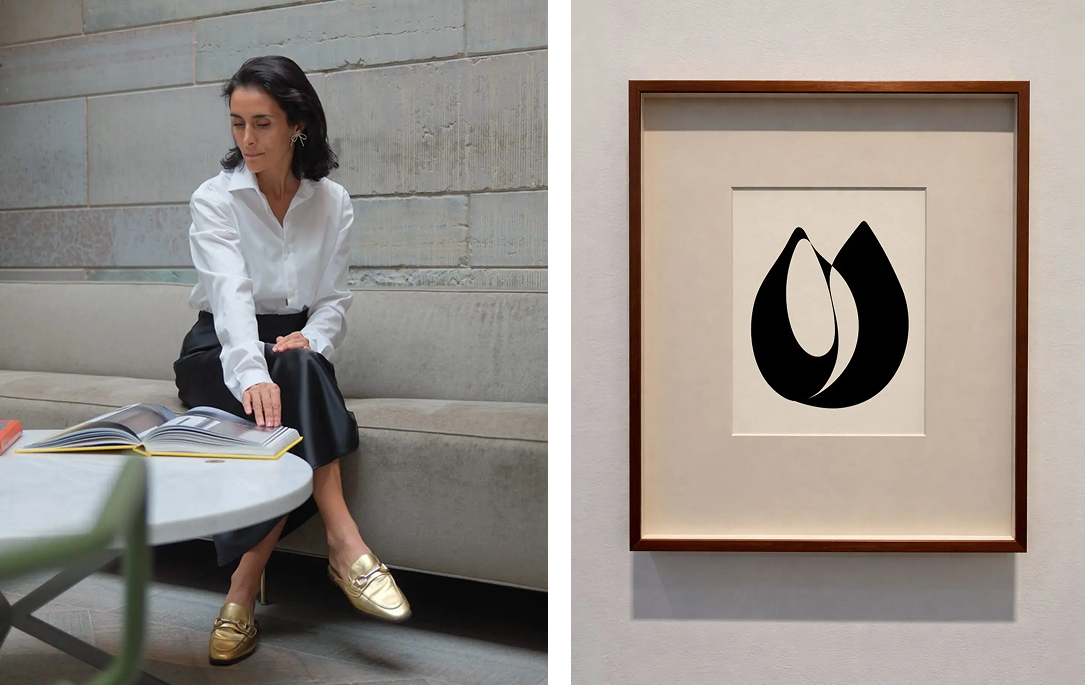
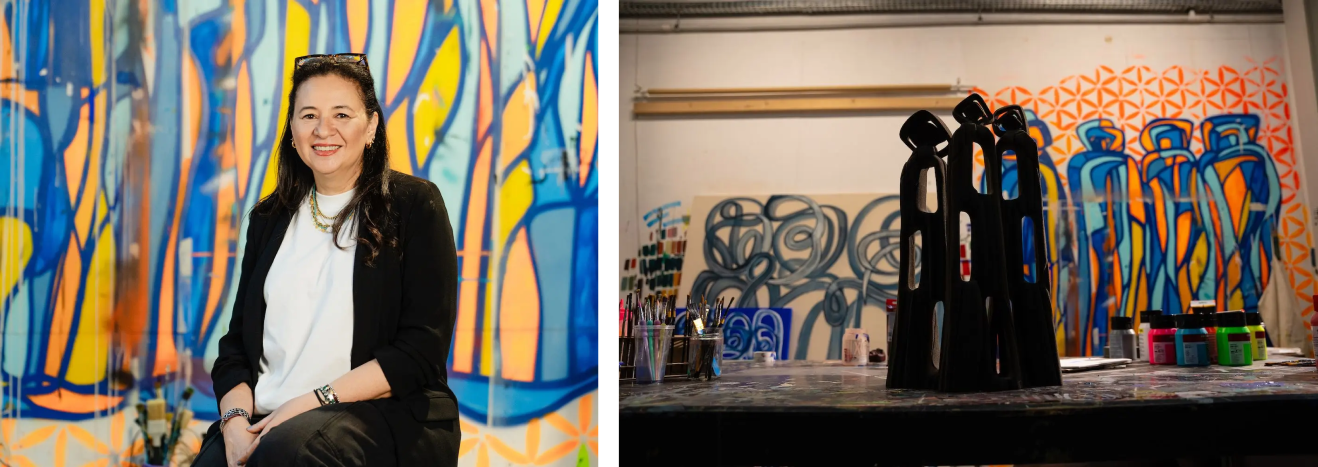
Sepideh Ilsley
For Sepideh Ilsley, the notion of “quiet resistance” unfolds through the act of painting itself — not as escape, but as insistence.
Her work approaches beauty not as decoration, but as something necessary — a way to remain grounded when the external world feels unstable. Returning to the canvas becomes a form of presence: a steady engagement with complexity, without the need to immediately resolve it.
Rather than constructing fixed narratives, her paintings evolve through openness. Each piece is shaped by an intuitive process, where gestures respond to both internal states and external conditions. The works resist linear storytelling, instead forming an emotional landscape — one that reflects endurance, subtle shifts, and the ability to continue without certainty.
There is a deliberate pacing within her process: repetition, pause, and reworking. Beneath the restrained abstraction lies a continuous negotiation between control and release. What appears minimal carries the weight of revision, persistence, and a quiet determination to stay with the work.
Rabab Tantawy
For Rabab Tantawy, resistance is found in refusing resolution.
Her practice resists the expectation to clarify or refine emotional states into something complete. Instead, her work remains within the unresolved — occupying a space that is still in motion, still forming.
The pieces selected for this drop reflect a moment that feels fast, layered, and difficult to fully grasp from within. Figures overlap and compress into each other, creating a sense of density and urgency. The title In a Blur captures this condition — the awareness that time will later be understood differently, even as it remains indistinct in the present.
Her process is immediate and instinctive. Lines are drawn quickly, with minimal correction, carrying the physical and emotional state of the moment in which they are made. The tension within the compositions — between compression and movement — mirrors an internal pressure, yet the works never collapse. Instead, they hold together, sustaining a sense of continuity within intensity.
Olivia Babel
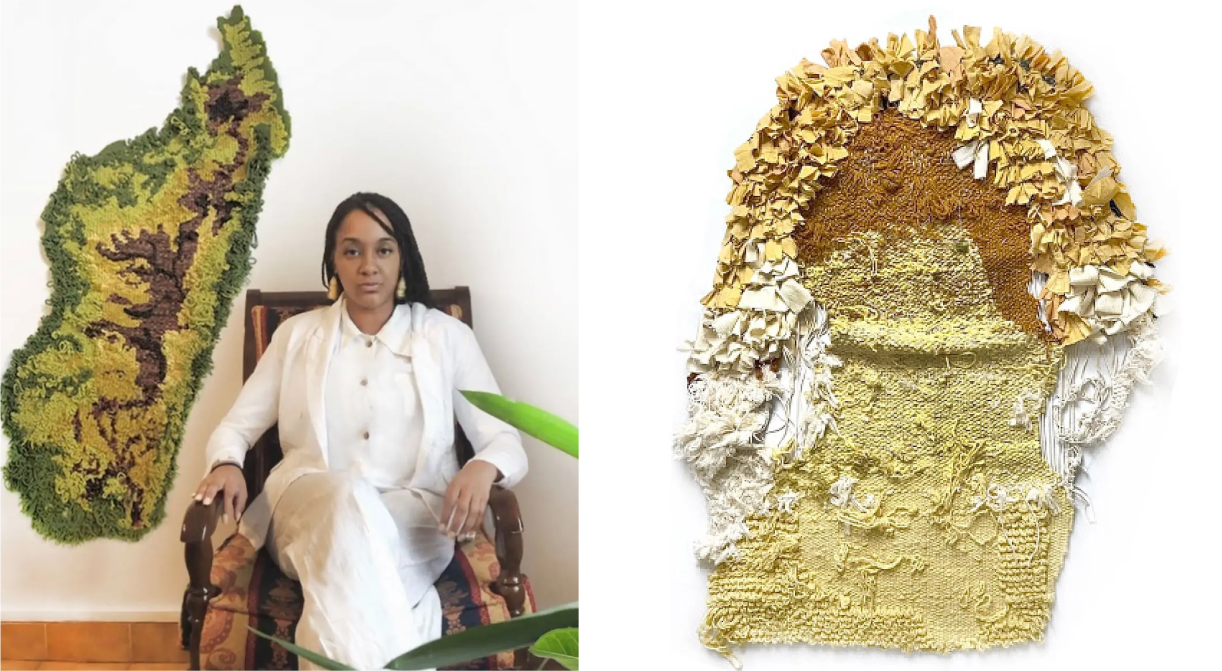
Olivia Babel approaches resistance from a more inward direction — as a search for balance and alignment.
Her work moves through ritual, material, and repetition, positioning creation as a form of reconnection. Through her tapestries, she constructs spaces that extend beyond the visual — inviting emotional and symbolic engagement.
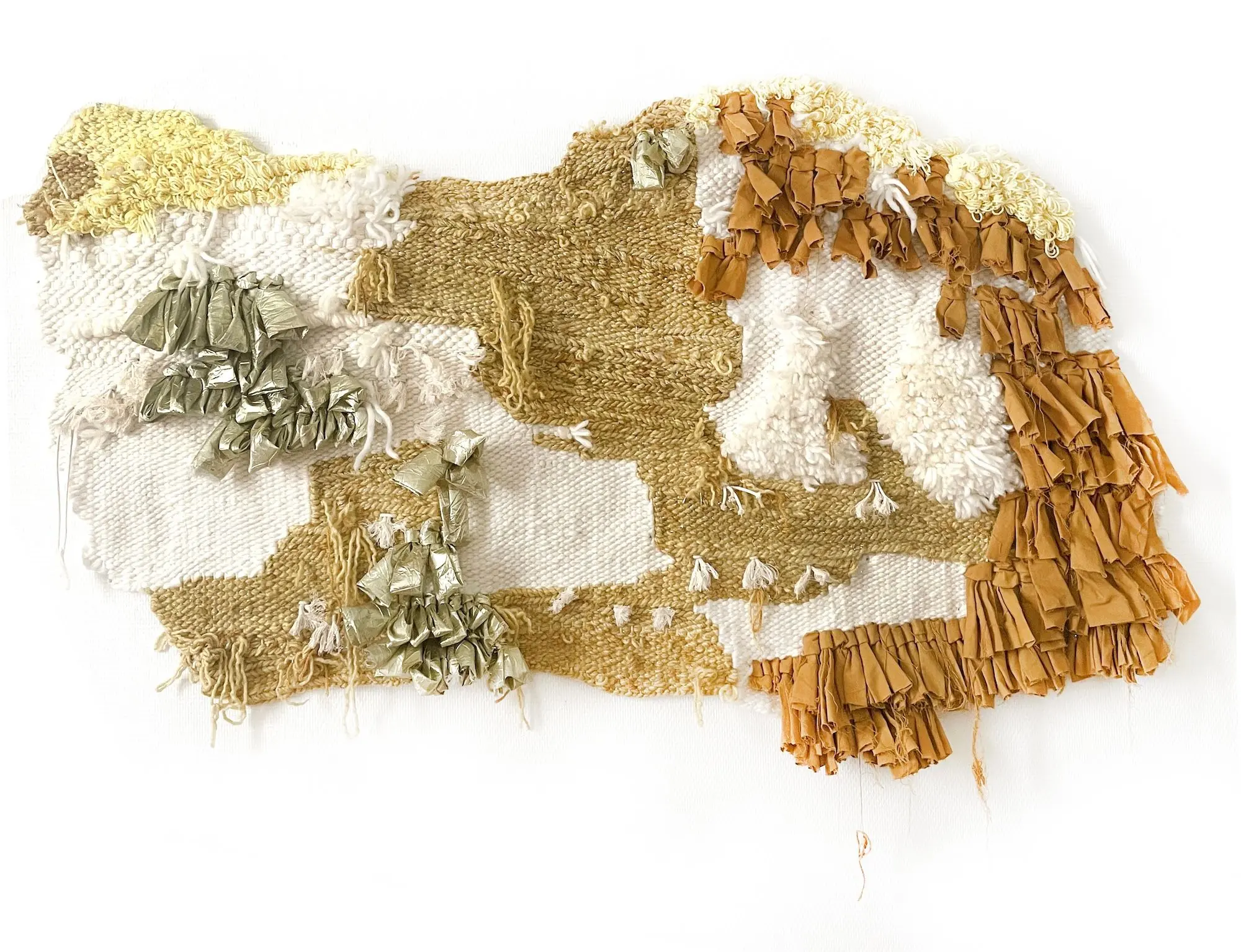
The works presented, DESERTIC 1 and DESERTIC 2, emerge from an ongoing exploration of arid landscapes. Rather than depicting nature directly, they translate its essence into woven form — distilling atmosphere, rhythm, and presence into abstraction.
Her practice draws on traditional handweaving techniques, combining wool, thread, and textile structures into layered compositions. Each piece is built slowly, over extended periods of time, where the act of making becomes inseparable from the meaning it carries.
What remains unseen is as significant as what is visible: the hours embedded into each work, the physical rhythm of weaving, and the intention carried through each gesture. The result is not representation, but a quiet, immersive experience — one that offers stillness, reflection, and a sense of connection beyond the immediate.
Across different practices, a shared thread emerges: creation as persistence. Not as a declaration, but as a continuation — a way of moving through uncertainty without needing to resolve it.
In this context, Creative Resistance — Drop 2 does not position itself as a moment of visibility, but as a space of intention. One that values presence over scale, and process over spectacle — where art exists not to compete for attention, but to remain, quietly and consistently, in motion.
Latest Posts

The city’s best Halloween dinners, DJ nights, brunches and themed parties, all in one place
One of Dubai’s best-known shopping destinations is preparing for a major new chapter

Is a media outlet that is part of our agency and provides basic tools for nurturing your business.


