
Ever Wondered How Dubai Metro Stations Get Their Names? Here’s What Brands Actually Pay
From banks and property companies to tech brands, some of Dubai’s most familiar Metro station names are actually multimillion-dirham advertising deals. Here’s how the system works
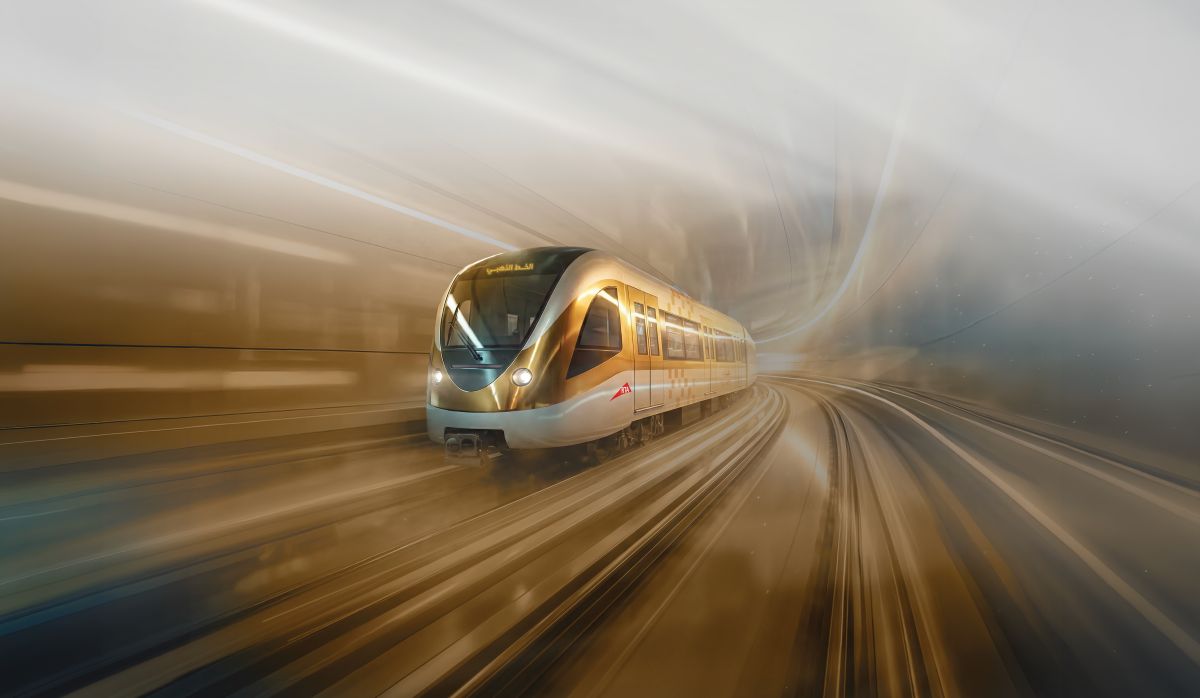
Anyone who has lived in Dubai long enough has probably experienced this particular kind of confusion: you arrange to meet someone at a Metro station, only to discover that the name you remember is no longer on the map.
It is not your memory playing tricks on you.
Dubai Metro stations have been changing names for years. What was once Noor Bank later became Al Safa, then ONPASSIVE, and in September 2026, Garmin became the latest name attached to the station. Mashreq station, meanwhile, was renamed InsuranceMarket.ae in 2024.
These changes are part of a deliberate commercial model rather than random rebranding. Dubai allows selected companies to purchase naming rights to certain Metro stations, effectively turning pieces of the transport network into some of the city's most visible advertising assets.
But how much is a Metro station name actually worth? And what does a company have to do to get onto the map?
First Things First: You’re Not Actually Buying a Station
A company paying for naming rights does not own the Metro station.
Instead, it enters into a commercial agreement that allows its brand name to become the station's official name for a defined period.
That distinction matters.
Unlike putting an advertisement inside a station, naming rights put the company directly into Dubai's transport infrastructure from a commuter's perspective.
The brand appears across Metro maps and signs, enters digital transport systems and is heard in station announcements. More importantly, people eventually begin using the brand name as a location.
A company is no longer simply advertising at a destination.
It becomes the destination.
So, How Much Does a Dubai Metro Name Cost?
There is no current public catalogue where companies can browse Metro stations and compare prices.
The value depends on the station and the commercial agreement.
However, when Dubai's naming-rights initiative was introduced in 2008, publicly reported figures placed deals at approximately AED 70 million to AED 90 million, with factors such as location, passenger traffic and commercial exposure affecting the value.
And the programme has generated significant revenue.
World Bank material on Dubai's station-naming model reports that Metro naming rights generated approximately AED 2 billion between 2010 and 2020.
That makes the names above Dubai's platforms considerably more valuable than they might first appear.
Why Would a Brand Spend That Much?
Consider how often a major Dubai Metro station is mentioned.
It appears in journey planning. People search for it online. Residents send the name to friends when arranging where to meet. Tourists see it on transport maps. Thousands of passengers hear it announced every day.
Traditional advertising has to fight for someone's attention.
A Metro station name does something different: it becomes part of everyday language.
The scale can be enormous. According to figures released in connection with Dubai's transport advertising sector, the National Paints naming partnership generated more than 47 million impressions in 2025, with over 12 million people exposed to the brand.
For the right company, that kind of integration into city life can be worth far more than a conventional campaign.
No, You Can’t Rename a Station After Yourself
Even with enough money, an individual cannot simply decide they would like their surname printed across the Dubai Metro map.
The programme is designed for corporate naming partnerships.
Businesses also have to meet eligibility requirements and comply with Dubai's standards. Certain sectors are excluded from the programme, including brands associated with areas such as tobacco, alcohol, gambling and adult content.
So an enormous marketing budget alone doesn't guarantee a place on the Metro map.
Can a Company Choose Any Station It Wants?
No.
Companies aren't given unlimited access to the entire network.
RTA determines which stations are available for commercial naming opportunities, and brands can pursue agreements within that framework.
Historically, stations connected with important geographical or heritage landmarks have been treated differently from commercially available stations.
So while imagining Your Brand/Burj Khalifa might make for an entertaining marketing meeting, companies cannot simply choose one of Dubai's most famous locations and make an offer.
Availability comes first.
Why Do Dubai Metro Stations Keep Changing Names?
Because naming rights do not last forever.
Once an agreement expires or a new partnership begins, the station may be renamed again.
One station provides a particularly good illustration.
Over the years, commuters have known it as:
Noor Bank → Al Safa → ONPASSIVE → Garmin.
For long-term residents, this creates the strange phenomenon of different generations of Dubai residents referring to exactly the same place by completely different names.
Someone might still instinctively say "Noor Bank", while another resident knows only ONPASSIVE and a newcomer in 2026 learns Garmin.
All three may be talking about the same Metro stop.
Garmin Is the Latest Big Change
In September 2026, Garmin became the newest brand associated with the former ONPASSIVE station.
But changing a Metro station's identity involves considerably more than replacing one sign above the entrance.
Maps need updating. Physical signage has to change. Digital platforms must be adjusted. Passenger information systems and onboard announcements also have to reflect the new identity.
That transition is being implemented progressively through November 2026.
Which explains another question Dubai residents may currently have: why can you hear or read "Garmin" in one place while still finding "ONPASSIVE" somewhere else?
The answer is simply that the city's transport ecosystem cannot be renamed everywhere simultaneously.
And What About Google Maps?
This is where things can become particularly confusing.
A commercial naming agreement can officially take effect before every third-party platform has caught up.
Google Maps and other navigation services operate their own databases and update processes. They aren't automatically transformed the second a new Metro partnership is announced.
During a transition, the old and new station names can therefore coexist across different platforms.
For commuters, it may look inconsistent.
Operationally, it is simply the digital aftermath of renaming part of a city used by millions of people.
Why Dubai's Approach Is Unusual
Other cities have experimented with sponsored station names, but many have been considerably more cautious.
One common solution is to retain the geographical station name and add a sponsor alongside it. That protects navigational continuity while still creating advertising space.
Dubai has taken the concept much further.
Here, a corporate identity can effectively become the location itself.
And that is arguably the most interesting part of the entire programme.
Dubai didn't simply find another place to display advertising.
It turned the Metro map itself into commercial real estate.
The next time someone tells you to meet them at InsuranceMarket.ae or Garmin, you're therefore looking at more than an unusual station name.
You're looking at a branding deal potentially worth tens of millions of dirhams — hiding in plain sight on your daily commute.
Latest Posts

Forget the usual fall neutrals. Autumn 2026 is arriving in the UAE with richer, bolder and far more expressive colour
From a botanical drinks lab to a London dining heavyweight and a sky-high Asian destination, Dubai’s September openings are worth making plans for

Is a media outlet that is part of our agency and provides basic tools for nurturing your business.


