
Art Dubai 2026: First Insights Into a Reshaped 20th Edition
A rescheduled 20th edition shaped by current realities, bringing together regional strength, global voices, and a more focused, adaptive fair format
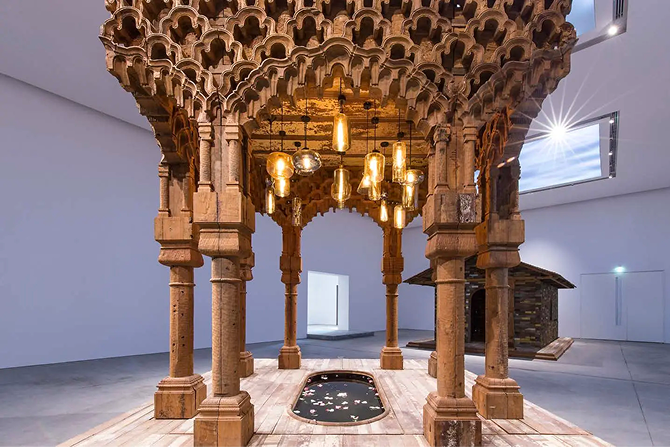
Originally scheduled for mid-April, Art Dubai 2026 will now take place from 15 to 17 May, following a recent change in dates. Alongside this shift, the fair has revealed its first details — offering an early look at what will be a notably different edition.
A milestone year, approached differently
Marking its 20th anniversary, this year’s Art Dubai unfolds in a more considered and compact format at Madinat Jumeirah. Over two decades, the fair has evolved in parallel with the city itself, becoming a central force within the region’s cultural development.
Executive Director Benedetta Ghione highlights this connection, noting that the trajectory of Art Dubai is deeply intertwined with Dubai’s own rapid growth. While the anniversary edition has been shaped by external circumstances — and may differ from what was originally envisioned — its defining elements remain unchanged. The fair continues to be anchored by its galleries, its programmes, and the long-standing collaborations that have supported its identity.
Rather than expanding outward, this edition turns inward — focusing on the foundations that have sustained it over time: regional engagement, independence, and an ongoing exchange between local and international perspectives.
A line-up reflecting an ecosystem
This year’s fair will feature over 75 presentations, bringing together galleries, institutions, and cultural partners. At its core are more than 45 gallery booths, spanning contemporary, modern, and digital practices.
Notably, around 60% of participants are regionally based, reinforcing Art Dubai’s strong local grounding while maintaining a global outlook.
International galleries such as Perrotin and Galleria Continua return alongside names like Galerie Frank Elbaz, Pedro Cera, and Waddington Custot — all of which have established ties to the region.
Dubai’s own gallery scene remains central, with spaces including Carbon 12, The Third Line, Lawrie Shabibi, Leila Heller Gallery, and Gallery Isabelle continuing to shape the city’s commercial art landscape.
Across the wider region, galleries such as Athr, Hafez Gallery, Ayyam Gallery, Saleh Barakat Gallery, Agial Art Gallery, and Zawyeh Gallery contribute to a broader regional narrative.
Alongside these established names, a new generation of spaces — including Art Fungible, Iregular, and Nika Project Space — signals a continued interest in experimental, digital, and cross-disciplinary practices.
Taken together, the selection reads less as a curated “best of” and more as a living snapshot of the region’s art ecosystem — where legacy galleries, regional anchors, and emerging voices intersect.
Beyond the booths
Art Dubai 2026 extends far beyond its gallery presentations. The programme includes a wide range of exhibitions, installations, performances, screenings, and talks taking place across the venue.
Highlights include Made Forward, a major presentation from the Dubai Collection, as well as the 20th edition of the Global Art Forum, curated by Shumon Basar. Additional presentations feature modern Arab art from the Barjeel Art Foundation and a performance collaboration with the Sharjah Art Foundation.
Large-scale installations and newly commissioned works will be integrated throughout the site, with participating artists including Khalid Al Banna, Hashel Al Lamki, Rashid Bin Shabib, Ahmed Bin Shabib, Rami Farook, Kevork Mourad, Yaw Owusu, Neda Razavipour, and Sudarshan Shetty.
Moving image also takes a prominent role this year through a programme developed in collaboration with Alserkal Avenue, alongside partnerships with Art Jameel and the National Pavilion UAE.
A fair shaped by the moment
This edition reflects the broader realities of today’s art market. It brings together long-standing international participants and regional galleries that have helped build the UAE’s cultural infrastructure, while also introducing a number of first-time exhibitors.
A particularly notable shift is the introduction of a risk-sharing model. Instead of fixed booth fees, galleries will contribute based on their sales performance during the fair — a move that responds directly to current economic pressures within the art world and signals a more flexible approach to participation.
More broadly, Art Dubai continues to position itself as an integral part of the city’s cultural fabric, sustained through ongoing collaborations with institutions, private initiatives, and creative platforms across the UAE.
Latest Posts

The city’s best Halloween dinners, DJ nights, brunches and themed parties, all in one place
One of Dubai’s best-known shopping destinations is preparing for a major new chapter
Is a media outlet that is part of our agency and provides basic tools for nurturing your business.


