
Arab Cinema Takes Centre Stage at Venice With a New Creative Confidence
Arab filmmakers at Venice are bringing bold, personal stories that move beyond familiar narratives and expectations
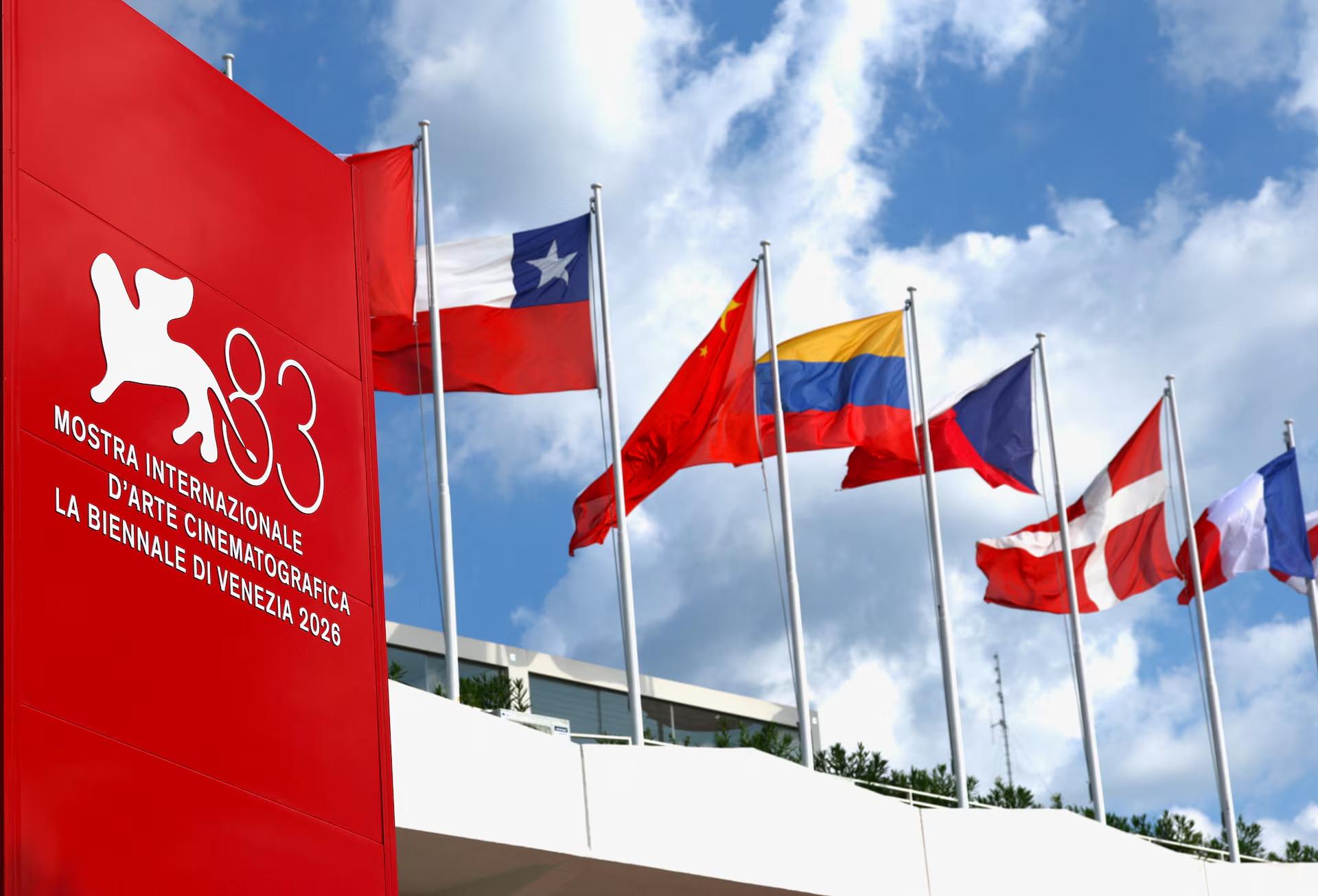
Arab cinema has emerged as one of the most compelling voices at this year’s Venice Film Festival, with filmmakers from Palestine, Lebanon and across the region presenting stories that resist simple definitions.
Rather than explaining the Arab world for an international audience, these films approach politics, conflict, identity and displacement through distinctly personal cinematic languages. Documentary, thriller and intimate drama sit side by side, revealing a film scene increasingly comfortable with complexity.
Citizen Osama Brings Gaza to Venice
One of the festival’s most powerful moments came with Citizen Osama, Ahmed Hassouna’s documentary filmed inside Gaza. The screening received a standing ovation, although Hassouna himself was unable to attend because he remains in Gaza.
The film has also been selected to represent Palestine at the Academy Awards.
At its centre is Osama Al-Ashi, a photographer who becomes a war reporter while navigating his responsibilities as a husband and new father. His days move between documenting explosions and destruction and searching for basic necessities for his newborn child.
Instead of attempting to explain Gaza through a conventional political narrative, Hassouna focuses on ordinary people living through extraordinary circumstances. The intimacy of that approach gives the documentary much of its emotional force.
Furies Turns Lebanon’s Crisis Into a Heist Story
Lebanese filmmaker Rami Kodeih takes a radically different approach with Furies, an Arabic-language heist film inspired by the realities of Lebanon’s financial collapse.
The story follows sisters Maro and Dalia, who decide to rob the bank holding their savings when they desperately need money for Dalia’s surgery.
Rather than treating the economic crisis solely through serious social drama, Kodeih combines thriller, dark comedy and chaos. Lebanon’s instability becomes part of the film’s pace and energy.
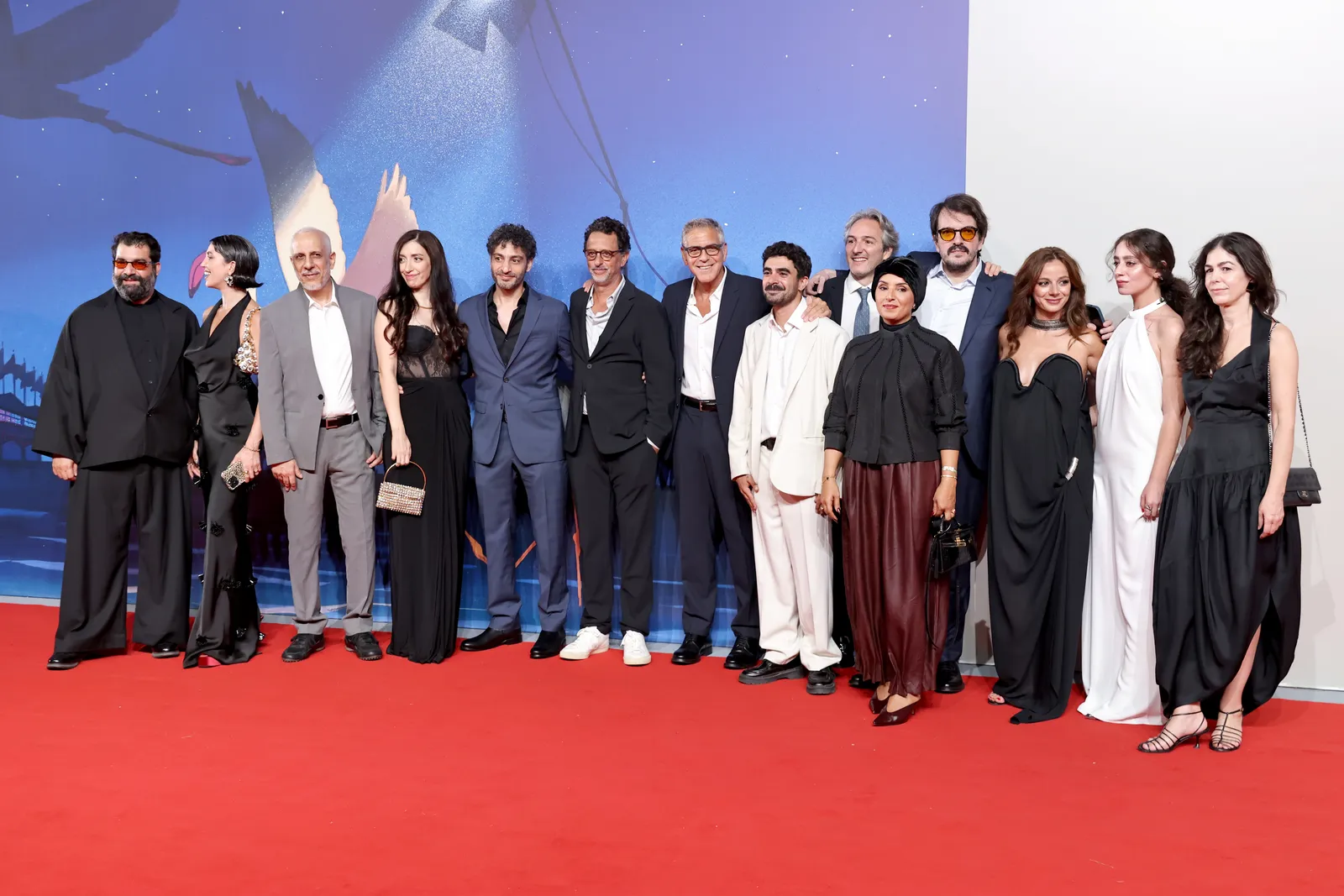
The project also received major Hollywood backing. George Clooney and Grant Heslov joined as executive producers through Smokehouse Pictures, with Clooney appearing alongside Kodeih and the cast at the Venice premiere.
Rym Mroue and Maria Nakouzi lead the film as the two sisters, portraying characters who are impulsive, vulnerable, angry and morally complicated. Importantly, they are not positioned as representatives of a single idea of Arab womanhood, but simply as complex protagonists.
Palestinian Stories Beyond Conventional Narratives
Another Palestinian filmmaker, Muayad Alayan, brings a quieter perspective with Conversation With the Sea.
The film follows a father searching for answers about his son, who is believed to have drowned decades earlier. Rather than relying on direct political exposition, Alayan explores absence, memory and unresolved grief.
Palestine remains deeply present, but emerges through personal experience, spaces and silence rather than explanation.
Lebanese-Moroccan filmmaker Shaden Safieddine Tazi explores another consequence of conflict in A Few Moments of Happiness. Her short film focuses on experiencing war from a distance and the emotional divide between those living through violence and those following events from abroad.
Through screens, messages and fragmented communication, the film examines the guilt and helplessness increasingly familiar to diaspora communities.
Complex Women, Without Easy Answers
May El-Toukhy’s Woman Unknown offers another perspective. Set in post-war Denmark, the film examines shame, social expectations and the ways control can persist long after direct violence has ended.
Its female protagonist is deliberately difficult to categorise. Instead of telling audiences whether to sympathise with or condemn her, El-Toukhy allows ambiguity to drive the story.
That complexity reflects a broader development visible across this year’s Arab films at Venice.
There is no single aesthetic connecting these projects — and that may be precisely the point.
A More Confident Chapter for Arab Cinema
From the immediacy of Citizen Osama to the genre-driven energy of Furies, these films demonstrate how varied contemporary Arab filmmaking has become.
They do not share one style, political message or definition of what an “Arab film” should be. What they do share is a growing confidence in telling stories without simplifying them for international audiences.
Significant barriers remain. International financing, co-productions and major festivals continue to play an important role in bringing many Arab productions to global audiences. Hassouna’s inability to attend the premiere of his own film is an especially stark reminder of the realities that can exist alongside international recognition.
Yet Venice also shows a clear shift.
Arab filmmakers are increasingly arriving at the world’s major festivals not simply seeking visibility, but bringing fully formed perspectives, distinctive cinematic languages and characters that are allowed to remain complicated.
The story is no longer only about international cinema discovering Arab filmmakers. It is about Arab filmmakers defining for themselves how their stories should be told.
Latest Posts

At Dubai AI Festival 2026, the academy will showcase its hands-on training programs designed to equip enterprises, universities, and professionals with the skills to defend against emerging AI threats
After nearly a decade away, the Dubai International Film Festival is preparing to return with a fresh identity, a stronger focus on regional storytelling, and new opportunities for the film industry

Is a media outlet that is part of our agency and provides basic tools for nurturing your business.


