
Abu Dhabi Becomes an Open-Air Gallery for Its 2026 Art Biennial
From floating porcelain sculptures to monumental installations inspired by Emirati heritage, the Public Art Abu Dhabi Biennial transforms familiar urban spaces into extraordinary cultural experiences
Abu Dhabi is inviting visitors to discover the city from an entirely different perspective. With the return of the Public Art Abu Dhabi Biennial, marketplaces, waterfronts, cultural districts and historic landmarks have become the setting for a remarkable collection of contemporary artworks.
The Biennial's second edition, titled Home: A Glossary for a Communal Sense of Place, explores the many ways people develop emotional connections with their surroundings. Through sculpture, sound, architecture and interactive installations, the exhibition examines the relationship between personal identity, cultural memory and the places we call home.
Taking place across Abu Dhabi and Al Ain, the event brings together 21 artists and collectives from the UAE and around the world. The Al Ain programme launched on October 23, 2026, followed by Abu Dhabi on November 15. Both will remain open until February 15, 2027.
Unlike exhibitions confined to traditional galleries, this ambitious cultural initiative places art directly into the rhythm of everyday city life. Admission is free, making the experience accessible to residents, families and travellers alike.
Art That Moves, Sounds and Invites Participation
One of the Biennial's most captivating destinations is Souq Al Mina, a lively waterfront marketplace in Abu Dhabi's historic port area.
Here, contemporary artistic expression meets the familiar atmosphere of local cafés, restaurants and shops.
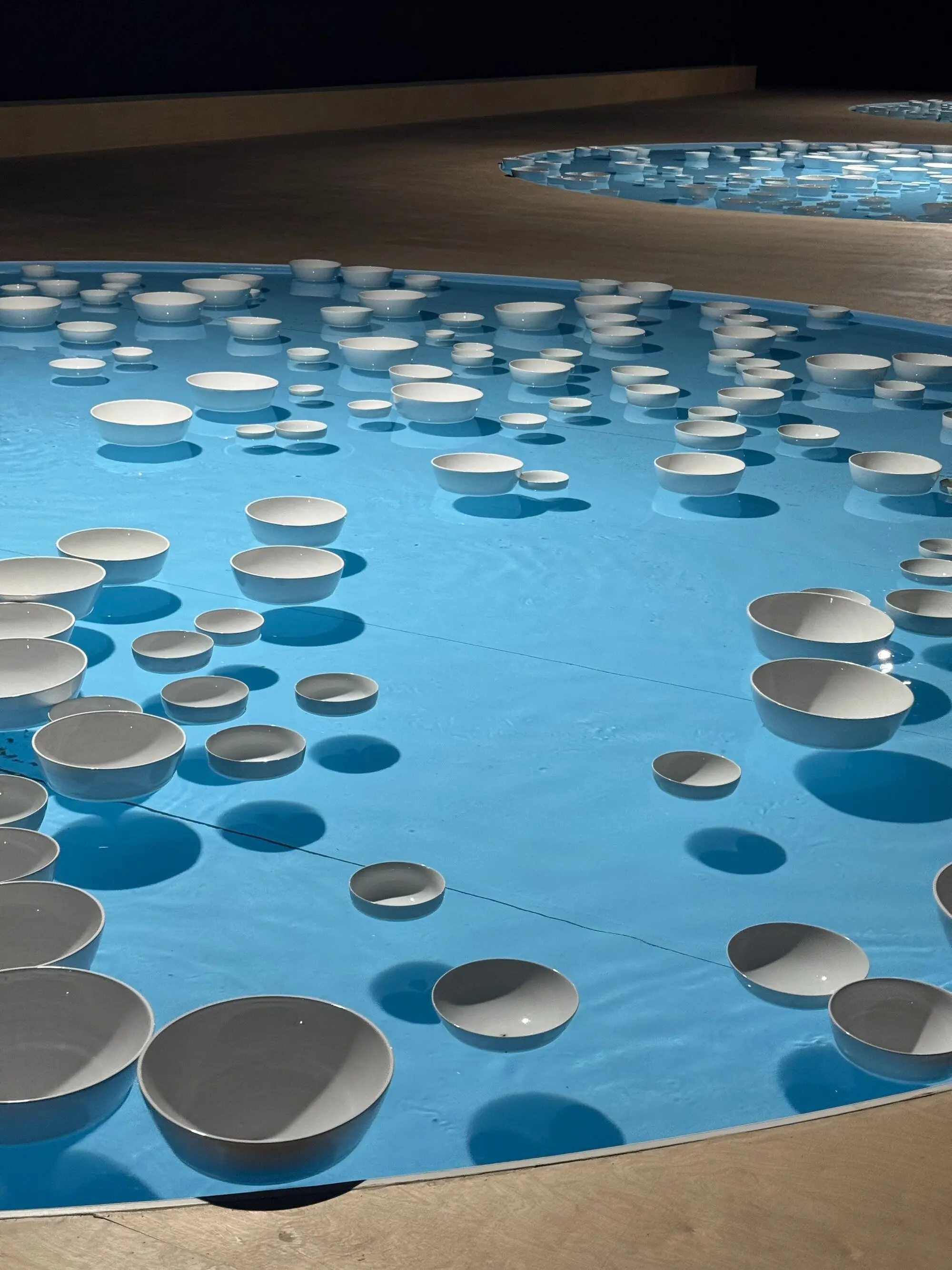
Among the exhibition's standout works is clinamen (v.13) by French artist and composer Céleste Boursier-Mougenot.
The installation features delicate white porcelain bowls floating across three pools of blue water. As the vessels move and gently collide, they produce unexpected musical tones, creating an evolving composition shaped by movement and chance.
The work transforms an ordinary material into an immersive sensory experience, encouraging visitors to slow down and engage with sound in an entirely new way.
Another installation designed around collective experience is AGORA: A Dance of Umbrella Forests by Ghanaian collective blaxTARLINES.
Inspired by the kyiniyɛ, a ceremonial umbrella associated with traditional authority in Ghana, the installation brings together a colourful arrangement of canopies that provide shade and space for gathering.
The result is both an artistic statement and a welcoming social environment where visitors can sit, relax and interact.
Italian artist Marinella Senatore contributes another striking visual moment with I Contain Multitudes, an illuminated architectural installation influenced by the decorative lighting traditionally associated with Italian celebrations.
Its glowing structure introduces a festive atmosphere into the marketplace while highlighting how artistic traditions can travel between cultures.
When Art Becomes an Experience
Several works at Souq Al Mina go beyond visual appreciation, encouraging visitors to become active participants.
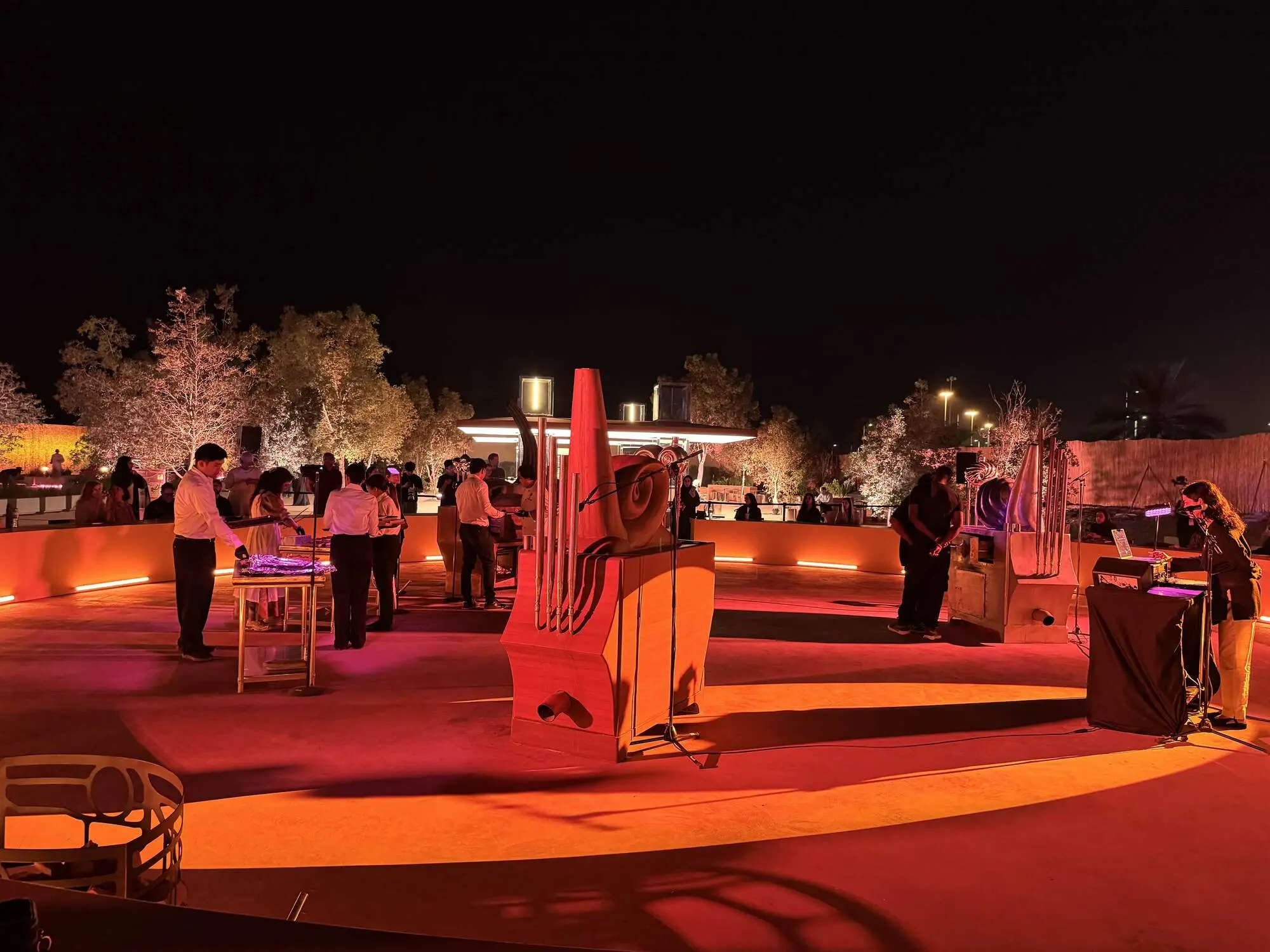
Mexican-born artist Vica Pacheco presents OO! (Oven-Organ), an experimental installation that combines cooking, music and performance.
Three wood-fired ovens have been transformed into functioning musical instruments, drawing inspiration from the distinctive whistle of traditional Mexican street vendors.
During selected evening performances, the installation becomes a meeting point for culinary creativity and sound. The opening programme included a collaboration with Emirati culinary producer Moza Almatrooshi, bringing local food culture into the artistic experience.
Additional cooking and performance sessions are scheduled on selected dates from 7:30 pm to 9 pm, with tickets priced at AED 150.
Visitors looking for something more playful can discover The Other, Me & The Others by Colombian artist Iván Argote.
At the centre of the work is an oversized circular seesaw that requires several participants to move together.
Simple in concept yet powerful in execution, the installation transforms cooperation into a physical experience, inviting strangers to communicate, coordinate and share a moment of enjoyment.
Other notable works in the area include Laure Prouvost's Landed Here To Sea You With…, Elena del Rivero's Letter to the Mother, Mercedes Azpilicueta's Montipora foliosa and Serge Attukwei Clottey's Wole Worhe (We Know Each Other).
Together, these installations demonstrate how public art can encourage unexpected encounters and create new opportunities for human connection.
A New Perspective on Abu Dhabi's Maritime Heritage
The journey continues at MiZa, a developing creative neighbourhood situated within the historic Mina Zayed port district.
Known for its industrial character and growing artistic community, the area provides an intriguing backdrop for installations that explore architecture, heritage and urban transformation.
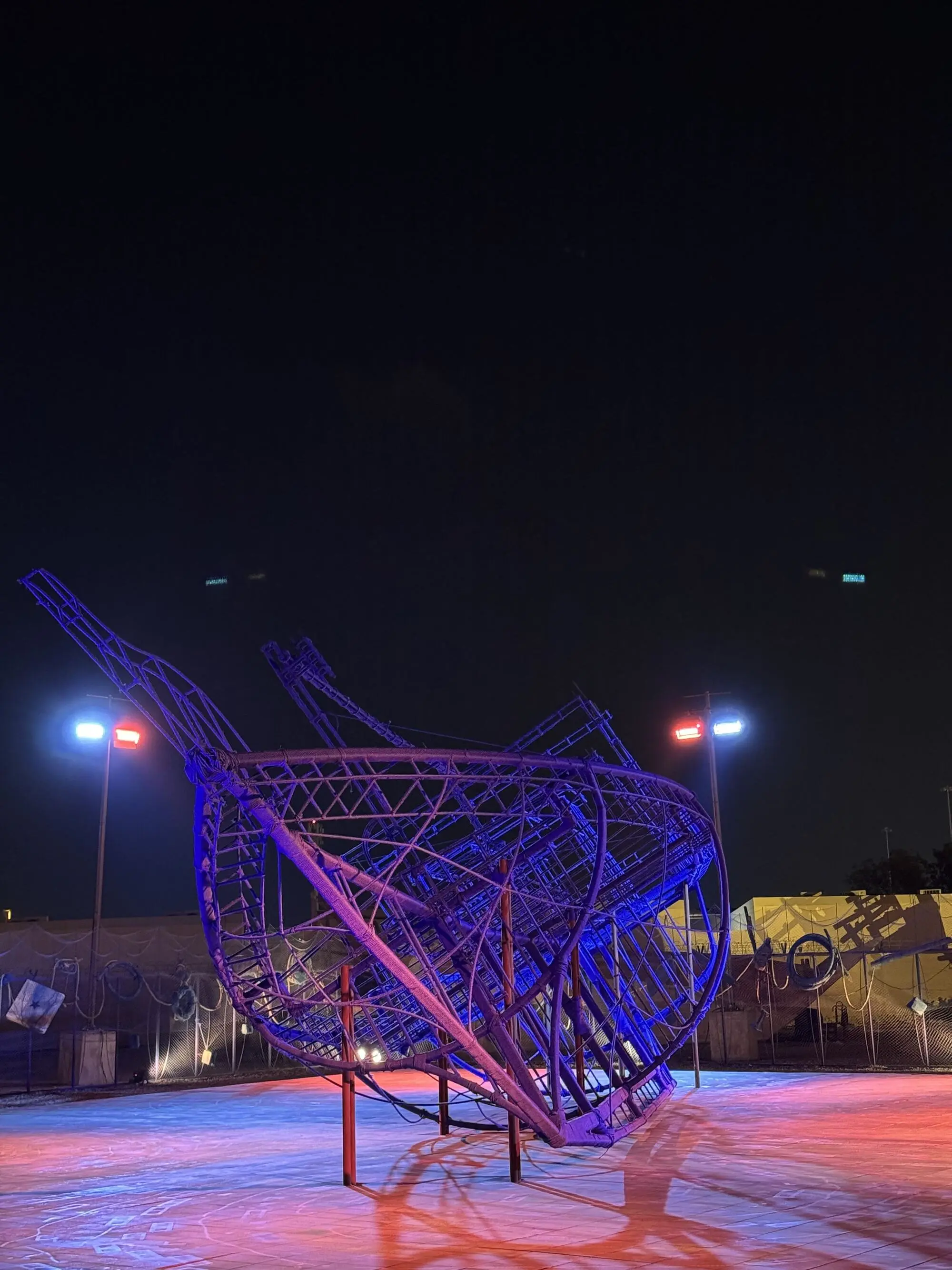
One of the most prominent works is Ground Break Duty by artist Nari Ward.
Occupying an entire courtyard, the installation takes the form of a skeletal traditional dhow, referencing the maritime vessels that once connected communities and trading destinations across the Arabian Gulf and Indian Ocean.
By reimagining an important symbol of regional history, Ward creates a visual dialogue between Abu Dhabi's commercial past and its contemporary cultural identity.
Emirati artist Khalid Al Banna also draws upon the country's maritime traditions with Gargour, a contemporary interpretation of the fishing traps historically used along the UAE coastline.
Its expressive colours and structural design offer a fresh perspective on an object deeply embedded in local heritage.
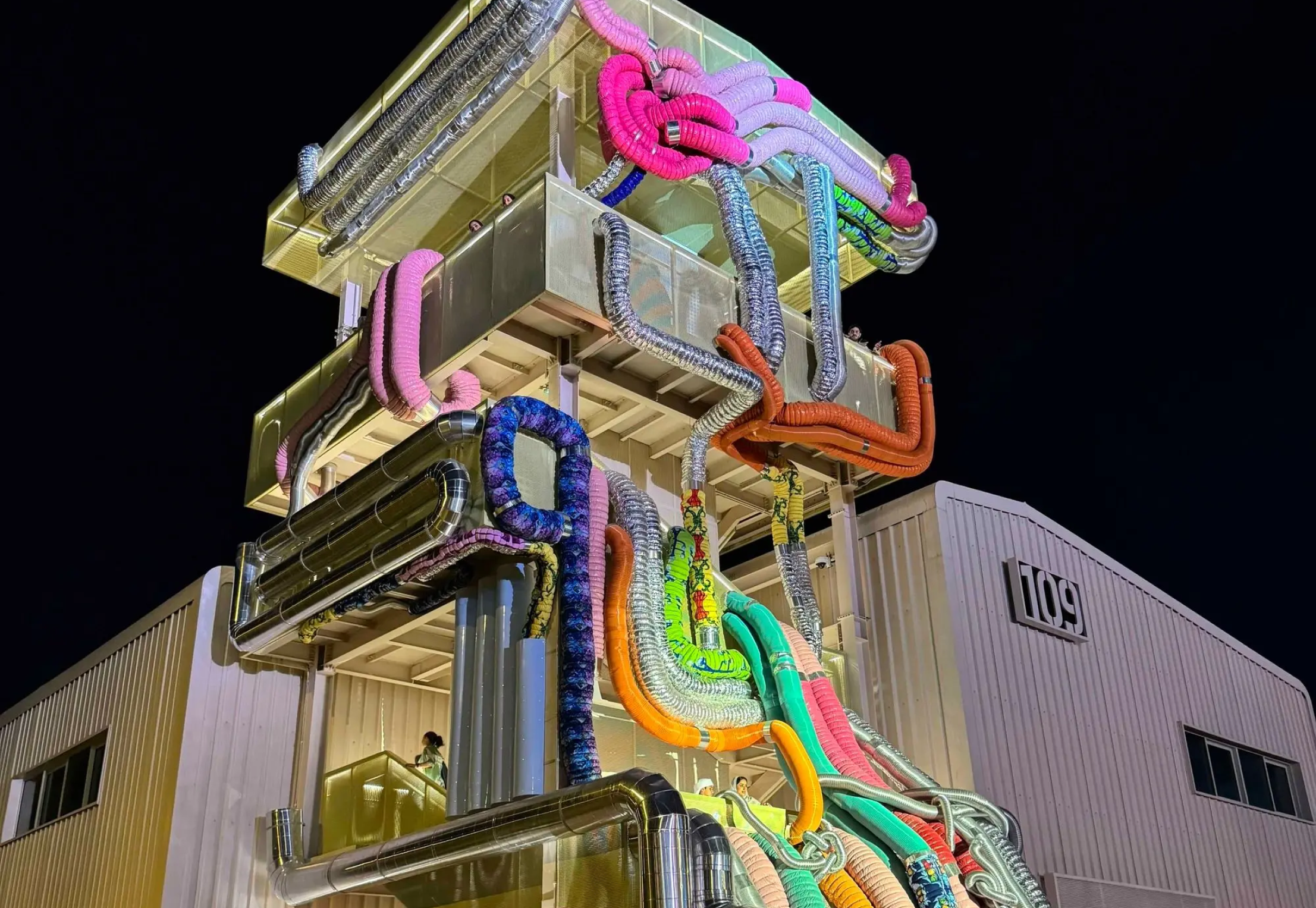
Meanwhile, Shama Al Hamed examines the infrastructure of modern cities through I Breathe Through the City.
Presented at the MiZa Observation Deck, the work brings ventilation systems and architectural elements into focus, encouraging visitors to consider the technologies that quietly shape daily life in the region.
Another thought-provoking contribution comes from Lebanese artist Akram Zaatari.
His installation Above and Below depicts the roots of an olive tree growing around an ancient sarcophagus.
The sculpture introduces a complex question about cultural preservation: what happens when protecting an archaeological discovery may require destroying a living tree?
Through this seemingly simple conflict, the artwork invites reflection on heritage, nature and the decisions societies make about what deserves to survive.
Contemporary Art Meets Saadiyat Island
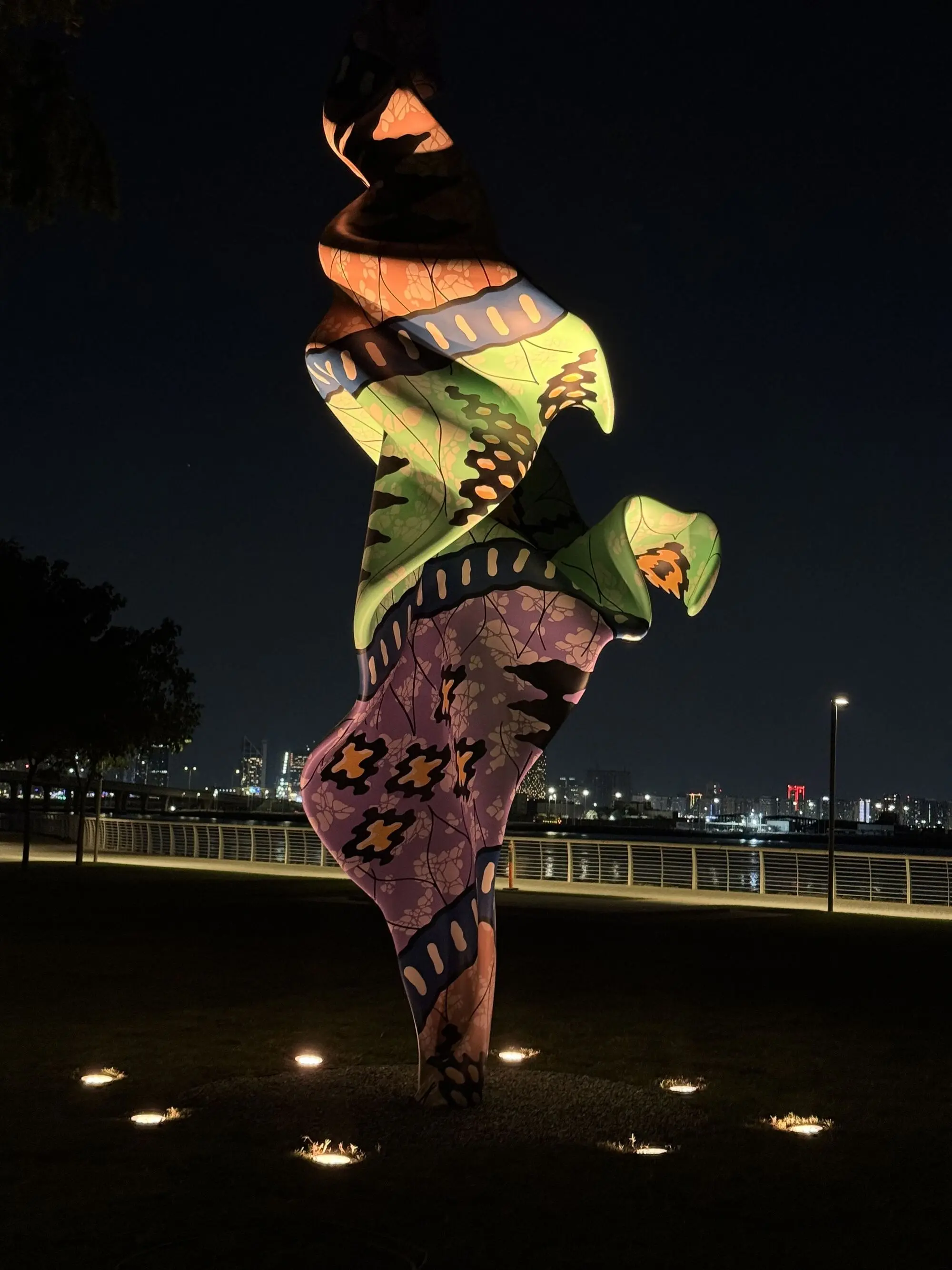
Saadiyat Island, already recognised as one of Abu Dhabi's most important cultural destinations, provides another setting for the Biennial.
The programme extends across two locations: the park situated between Zayed National Museum and Louvre Abu Dhabi, and the waterfront promenade at Hidd Al Saadiyat.
Between the museums, visitors can discover Wind Sculpture (TG) III by internationally acclaimed artist Yinka Shonibare.
The monumental sculpture captures the appearance of fabric suspended in motion, bringing together the artist's signature references to Dutch wax textiles and patterns associated with Al Sadu, the traditional weaving practice of Bedouin communities.
By combining elements connected to different geographical and cultural histories, Shonibare creates a work that reflects the movement of traditions across borders.
At Hidd Al Saadiyat, French sculptor Jean-Marie Appriou presents Horizons, an imaginative installation where ancient mythology encounters futuristic imagery.
The sculpture features two astronauts travelling aboard an aluminium vessel inspired by the solar boats of ancient Egypt.
This unexpected combination of historical symbolism and space exploration encourages viewers to consider humanity's enduring fascination with discovery, travel and the unknown.
Also located along the waterfront is Plotting Rest by Kapwani Kiwanga, adding another dimension to the island's outdoor art experience.
With its coastal views and open surroundings, Saadiyat offers a particularly atmospheric setting for exploring the exhibition during the late afternoon and evening.
Discovering Art Beyond the Capital
The Biennial extends beyond Abu Dhabi to Al Ain, where two additional locations highlight the relationship between contemporary creativity and the region's cultural landscape.
At Al Qattara Oasis, part of Al Ain's UNESCO-listed cultural heritage landscape, visitors can explore installations by Asunción Molinos Gordo, M'barek Bouhchichi and Reena Saini Kallat.
The historic oasis provides a distinctive setting in which contemporary art interacts with traditional agricultural landscapes and the memory of earlier generations.
At Al Towayya Roundabout, Emirati artist Roudhah Al Mazrouei presents Tassa, an ambitious 80-metre installation inspired by a traditional gold head ornament.
By expanding an intimate cultural object to an architectural scale, the artwork celebrates Emirati identity while offering a contemporary interpretation of inherited traditions.
Both Al Ain exhibition sites will remain accessible until February 15, 2027.
Bringing Art Into Everyday Life
What distinguishes the Public Art Abu Dhabi Biennial is not simply the scale of its installations or the international reputation of its participating artists.
Its significance also lies in the way it changes the relationship between art and the public.
Rather than requiring a dedicated museum visit, the exhibition integrates creative encounters into places people already frequent. A walk through a market, an evening by the waterfront or a family outing can become an opportunity to discover contemporary art.
The programme also places importance on younger audiences. Selected installations feature child-friendly explanations and questions designed to encourage curiosity and discussion.
Families interested in additional cultural activities can also explore the Children's Biennale at Umm Al Emarat Park.
Through this inclusive approach, Abu Dhabi continues to strengthen its position as a destination where contemporary culture is not limited to established institutions but becomes part of the wider urban experience.
At its heart, Home: A Glossary for a Communal Sense of Place offers a compelling idea: a sense of belonging is shaped not only by buildings and geography, but also by memories, encounters and the shared experiences that give places meaning.
For residents and visitors alike, the Biennial is an invitation to experience familiar surroundings differently — and perhaps discover something new about the city along the way.
Planning Your Visit
Public Art Abu Dhabi Biennial 2026–2027
- Dates: October 23, 2026 – February 15, 2027 (Al Ain); November 15, 2026 – February 15, 2027 (Abu Dhabi)
- Locations: Souq Al Mina, MiZa, Saadiyat Island and two exhibition sites in Al Ain
- Sunday–Thursday: 5 pm – 11 pm
- Friday–Saturday: 4 pm – midnight
- Admission: Free for the main exhibition
- Special events: Selected performances and experiences may require paid tickets and advance reservations
Visitors are encouraged to consult the official Biennial website and exhibition map for artwork locations, upcoming events and booking details.
Latest Posts

From glamorous Italian restaurants and beachfront celebrations to traditional Christmas feasts, discover Dubai's most inviting destinations for December 24
Directed by Sylvain Chomet and narrated by Robert Pattinson, Dior’s enchanting animated short brings together the golden age of Hollywood, Parisian haute couture and the timeless beauty of human creativity

Is a media outlet that is part of our agency and provides basic tools for nurturing your business.


